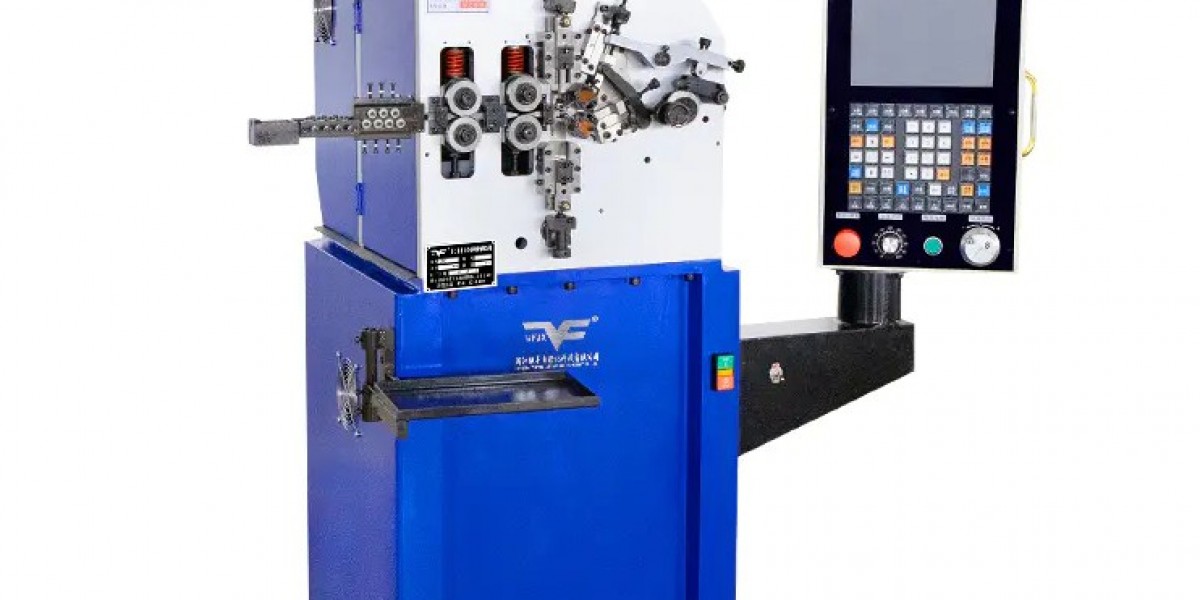

Selecting production equipment requires a clear understanding of the springs a factory intends to manufacture. A Coil Spring Machine may be used for different spring types, but its usable range depends on wire dimensions, forming mechanisms, tooling, and control functions. Reviewing these details before making an equipment decision helps manufacturers match machine capabilities with their actual production plans.
The first step is to define the product specifications. Buyers should identify the required wire diameter, spring diameter, pitch, free length, material type, and end configuration. They should also consider whether the production line will handle compression springs, extension springs, torsion springs, or several product categories. These requirements provide a practical basis for comparing available machine configurations.
Control systems are another consideration. A CNC Coil Spring Machine can store programs for different spring designs, making repeat production easier to organize. Depending on the model, operators may be able to adjust feeding length, forming positions, and other process parameters through the control interface. Buyers should confirm which functions are included rather than assuming that every machine supports the same operations.
Production volume also influences equipment selection. A factory manufacturing repeated orders may focus on stable cycle operation and convenient program management. A business serving customers with varied specifications may place greater value on flexible adjustments and tooling changes. In either case, the machine should accommodate the expected workload without creating unnecessary complexity for operators.
The surrounding production process should not be overlooked. Wire preparation, material storage, dimensional inspection, packaging, and finished-product handling can all affect the performance of a spring production line. A machine that fits the workshop layout and connects smoothly with existing processes can make daily scheduling easier. Space requirements, power supply, operator access, and maintenance clearance should therefore be reviewed before installation.
Technical support is also relevant when comparing equipment. Buyers may need assistance with initial setup, operator training, program adjustment, or troubleshooting. Clear documentation and accessible service channels can help production teams respond to operating problems. Spare-part availability should be discussed in relation to the machine's main wear components and expected maintenance schedule.
A Coil Spring Machine should ultimately be selected according to measurable production needs, not general promotional claims. Reviewing technical drawings, confirming the required forming range, and testing representative materials can help clarify whether a proposed configuration is suitable. With careful planning, manufacturers can establish a spring forming process that supports product consistency, manageable operation, and changing customer specifications.
https://www.spring-machine.net/product/spring-coiling-machines/