
Central Asia is attracting growing attention from fertilizer producers, chemical engineering companies, and international investors. Agricultural demand, phosphate rock resources, and ongoing industrial projects are creating opportunities for the regional phosphorus chemical industry. However, the market has characteristics that distinguish it from major fertilizer-producing regions with direct access to seaports.
For companies considering investment or cooperation in Central Asia, understanding resource distribution, transportation costs, agricultural demand, and local industrial policies is essential. The region's development potential depends not simply on expanding production capacity, but on building a competitive supply chain that matches its geographical and economic conditions.
1. An Uneven Distribution of Phosphate Resources and Market Demand
Central Asian countries have different resource advantages and fertilizer production capabilities.
Kazakhstan is the region's principal phosphate rock resource country. Its Karatau Basin contains substantial phosphate deposits, with proven reserves reported at approximately 2.5 billion tonnes. Kazphosphate holds access rights to multiple deposits in the area and plays a major role in the country's phosphate fertilizer industry.
The company has an annual production capacity of approximately 1 million tonnes. In 2025, its phosphate fertilizer production reached approximately 748,000 tonnes, while its products served both domestic and international markets. Kazakhstan's established phosphate mining and processing infrastructure gives it an important position in the regional supply chain.
Uzbekistan has a different industrial structure. Its agricultural sector, particularly cotton, wheat, and fruit and vegetable cultivation, creates demand for phosphate and compound fertilizers. However, its domestic phosphate rock resources are limited, making imported phosphate raw materials and intermediate products important to local fertilizer production.
Other Central Asian countries, including Turkmenistan, Tajikistan, and Kyrgyzstan, have relatively limited phosphate rock resources. Their markets rely more heavily on imported fertilizers, regional trade, and downstream blending operations.
This resource distribution suggests a natural division of labor: Kazakhstan can supply phosphate rock and intermediate materials, while other countries can focus on compound fertilizer production, formulation, and agricultural distribution.
2. Agricultural Demand Is Driving Fertilizer Market Development
Agriculture remains an important source of fertilizer demand across Central Asia. Wheat production, cotton cultivation, and commercial fruit and vegetable farming all require suitable nutrient management.
Kazakhstan accounts for approximately 81% of Central Asia's phosphate fertilizer consumption and around 78% of regional production, according to the market figures cited in the report. This concentration makes Kazakhstan the central market for regional phosphate fertilizer development.
Meanwhile, Uzbekistan presents opportunities in NPK compound fertilizers, water-soluble fertilizers, and crop-specific formulations. Soil salinization and irrigation-dependent agriculture also increase the importance of fertilizer products adapted to local soil conditions.
However, regional fertilizer demand should not be interpreted as unlimited growth potential. Improvements in fertilizer application efficiency, soil testing, and precision agriculture may reduce demand for conventional products while increasing the need for specialized formulations. Manufacturers will therefore need to compete through product suitability and agricultural services rather than relying exclusively on higher production volumes.
3. Major Industrial Projects Are Reshaping Regional Capacity
Several large-scale projects demonstrate the growing involvement of international engineering companies and investors in Central Asia's phosphorus chemical industry.
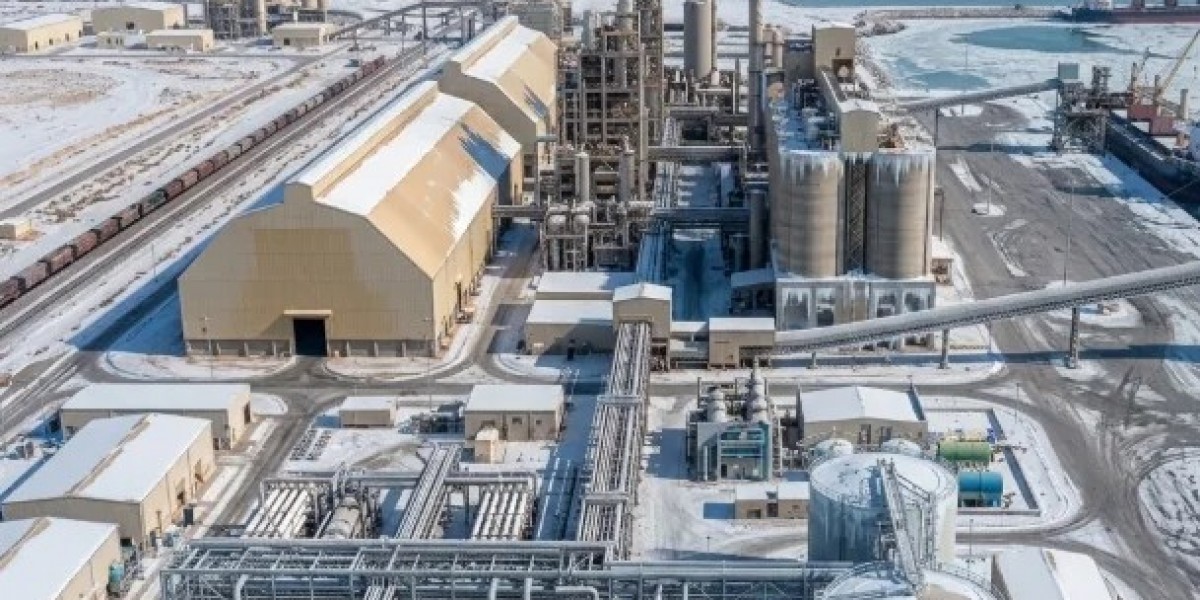
One important example is EuroChem's Karatau Phase III expansion project in Kazakhstan. The project involves the development of phosphate resources and an integrated chemical complex, with planned fertilizer capacity of approximately 1 million tonnes per year. China National Chemical Engineering has participated in the engineering and construction work.
Another important development is the 800,000 t/y sulfuric acid production line in Kazakhstan's Zhambyl Region. The project was undertaken by China National Chemical Engineering International Corporation, with Tianchen Corporation responsible for on-site execution. The production line entered operation in June 2026 and passed a 72-hour full-load continuous trial operation.
The Suzak phosphate mine and fertilizer project in Turkistan Region is also attracting attention. With an estimated investment of approximately US$320 million, the project is planned to process up to 2 million tonnes of phosphate ore annually. Its proposed products include phosphoric acid, DAP, MAP, sulfuric acid, and synthetic ammonia. Sinopec Nanjing Engineering is involved in the technical work.
In Uzbekistan, the Samarkand phosphorus chemical complex is designed to produce approximately 910,000 tonnes of fertilizer annually, including phosphate and compound fertilizers. The project reflects the country's intention to strengthen domestic fertilizer processing capacity and reduce dependence on imported finished products.
Together, these projects demonstrate opportunities for engineering contractors, process technology providers, equipment manufacturers, and fertilizer producers.
4. Logistics and Raw Material Supply Remain Major Challenges
Despite its resource advantages, Central Asia faces a fundamental geographical limitation: it is landlocked.
Fertilizer products intended for overseas markets must rely on cross-border railways, Caspian Sea transportation, or other transit corridors. Multiple transportation links, customs procedures, and transshipment costs can reduce the competitiveness of large-scale export-oriented projects.
This makes regional self-sufficiency and neighboring markets particularly important. Rather than competing directly with coastal fertilizer producers in North Africa or the Middle East, Central Asian manufacturers may achieve better economic results by supplying domestic agricultural demand and nearby markets.
Raw material supply is another consideration. Kazakhstan's sulfur export suspension, which began in June 2026, has changed regional sulfur trade conditions. Although restrictions can affect international supply chains and foreign exchange earnings, locally available sulfur may support domestic sulfuric acid and phosphate fertilizer production.
Other technical challenges also require attention. Low-grade phosphate rock may need additional beneficiation, while severe winter conditions increase requirements for equipment insulation, pipeline freeze protection, and plant maintenance.
Environmental management is equally important. Phosphogypsum disposal, wastewater treatment, dust control, and carbon emissions can influence project approval, operating costs, and access to international markets.
5. Where Are the Investment Opportunities?
The most practical opportunities may lie in upgrading existing facilities and developing downstream fertilizer processing rather than building oversized production complexes.
In Kazakhstan, investment priorities include phosphate rock beneficiation, modernization of sulfuric acid and phosphoric acid units, equipment upgrades, and phosphogypsum resource utilization. New integrated projects should undergo careful assessments of transportation economics, water availability, and local market demand.
In Uzbekistan, NPK compound fertilizers, cotton-specific fertilizers, water-soluble fertilizers, and soil improvement services offer potential development directions. Local processing of imported phosphate raw materials can also strengthen the domestic supply chain.
For Turkmenistan, Tajikistan, and Kyrgyzstan, smaller-scale fertilizer blending, agricultural input distribution, and regional supply cooperation may be more appropriate than capital-intensive phosphate mining and chemical projects.
Chinese companies have opportunities across these segments. Their participation can extend beyond direct investment to include EPC contracting, process licensing, equipment supply, technical upgrading, and plant operation and maintenance services.
The projects involving China National Chemical Engineering, Sinopec Nanjing Engineering, and Tianli Energy demonstrate how engineering capabilities and equipment supply can support industrial development in the region.
6. A More Practical Development Model for the Future
The long-term competitiveness of Central Asia's phosphorus chemical industry will depend on how effectively countries coordinate their different resource and market advantages.
Kazakhstan can strengthen its position as a regional supplier of phosphate rock, phosphoric acid, and related intermediates. Uzbekistan and other fertilizer-consuming countries can develop downstream processing and crop-specific fertilizer products.
At the same time, industrial projects should incorporate logistics assessments, severe-cold engineering standards, water management, phosphogypsum disposal, and carbon compliance into their early planning stages.
For international investors, existing plant modernization, equipment supply, and medium-sized fertilizer processing projects may offer more manageable entry points than large projects designed primarily for distant export markets.
Conclusion
Central Asia's phosphate fertilizer and phosphorus chemical industry has meaningful development potential, supported by Kazakhstan's phosphate resources, agricultural demand, and increasing international engineering cooperation. Nevertheless, landlocked transportation conditions, uneven resource distribution, severe winters, and environmental requirements will continue to influence investment decisions.
The most sustainable direction is likely to combine Kazakhstan's resource advantages with downstream fertilizer processing in neighboring countries. For Chinese engineering companies, equipment manufacturers, and technology providers, opportunities in plant modernization, EPC services, beneficiation technology, and specialty fertilizer production deserve particular attention.