
Installing conductors along a transmission line requires careful coordination between equipment, materials, and site conditions. As installation routes become longer and more complex, contractors must manage conductor tension, pulling resistance, changes in direction, and equipment loading. Poorly selected support equipment can increase friction, damage conductor surfaces, and interrupt the stringing process.
For power engineering contractors, equipment distributors, and procurement teams, finding a dependable Cable Roller Wholesale Supplier is an important step toward maintaining installation quality. Instead of comparing products by price alone, buyers should consider how each configuration performs under the actual conditions of a power line project.
Understanding the Role of Cable Rollers in Conductor Stringing
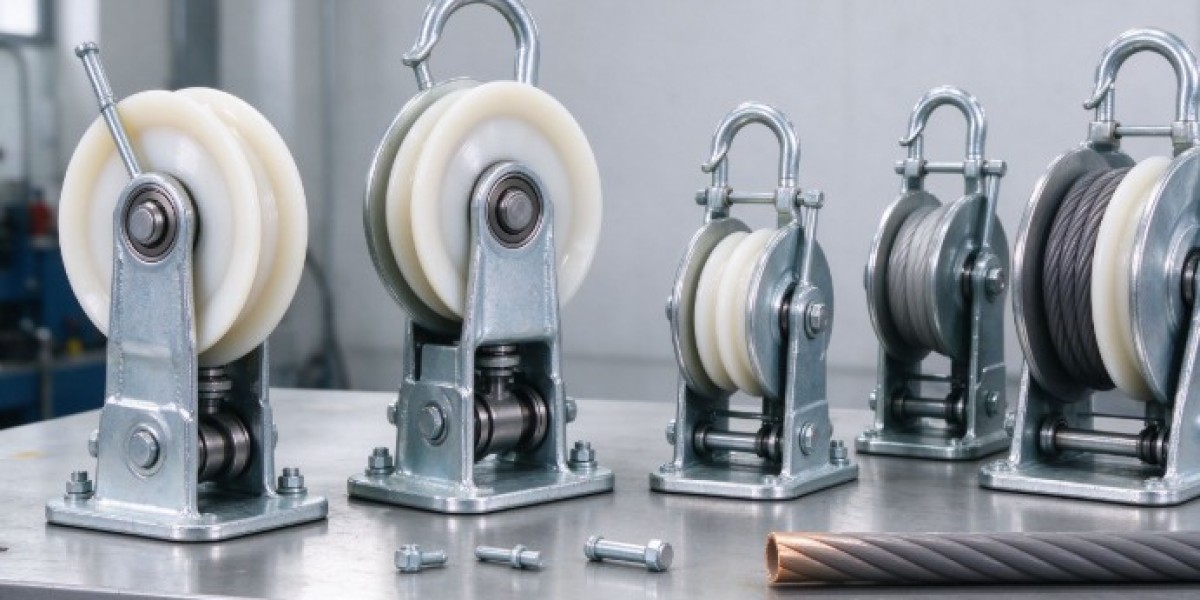
Cable rollers and conductor stringing blocks provide support and guidance while conductors are pulled through an installation route. By keeping the conductor away from direct contact with the ground and other structures, they help control movement and reduce unnecessary surface friction.
Different installation sections, however, require different roller designs. Straight-line applications, angle towers, and projects involving large-diameter conductors may have different requirements for sheave size, load capacity, and equipment structure.
A mismatch between the roller and conductor specifications can create additional resistance or affect installation stability. Therefore, equipment selection should be based on conductor dimensions, route conditions, and expected operating loads.
Key Technical Considerations When Buying Cable Rollers
1. Sheave Material and Conductor Compatibility
Sheave material directly affects contact conditions during conductor installation. MC nylon sheaves are commonly used in power line construction because of their wear resistance and relatively low friction properties. When properly matched to the application, they can help reduce surface abrasion during pulling operations.
Depending on the equipment design and project requirements, aluminum sheaves or rubber-lined configurations may also be suitable. Buyers should check the conductor material, outside diameter, and required surface protection before deciding which type to use.
2. Sheave Dimensions and Working Load
A suitable cable roller must accommodate both the conductor dimensions and the mechanical demands of the installation. Sheave diameter and rated load are two essential specifications to verify.
Donghuan Power Technology offers several conductor stringing block configurations. For instance, the 508 Series has options with rated loads ranging from 20 to 60 kN, while the 916 Series includes configurations rated from 50 to 150 kN.
These load ratings refer to particular configurations, not every product within each series. Procurement teams should confirm the exact model specifications and rated capacity with the supplier before ordering.
3. Bearing Quality and Structural Stability
The bearing system affects how smoothly a sheave rotates during conductor pulling. Excessive rotational resistance may increase the load on the pulling system and make installation less efficient.
Frame construction also deserves attention. The frame, connecting components, and supporting structure must be appropriate for the intended working load. Checking bearing arrangements, structural materials, and maintenance requirements can help buyers assess equipment reliability beyond its basic appearance.
4. Route Layout and Environmental Conditions
Installation environments can vary considerably between projects. Straight sections, directional changes, and large-conductor applications may require different roller arrangements.
Outdoor equipment must also withstand dust, moisture, temperature fluctuations, transportation, and repeated use. Selecting suitable materials and a robust structural design can help limit wear and reduce maintenance interruptions over time.
Choosing the Right Configuration for Different Conductors
Not every power line project can be completed with a single standard roller. Depending on the conductor specifications and installation procedure, contractors may require single-sheave blocks, multi-sheave blocks, or specialized configurations.
Donghuan Power Technology's product range includes the 822 Series, listed for ACSR630 conductor applications, and the 1040 Series, designed for large-diameter conductor stringing requirements.
These examples highlight the importance of matching equipment to the actual installation task. Before requesting a quotation, buyers should prepare key information such as conductor type and diameter, expected working load, route layout, and required quantities. Providing these details allows the supplier to recommend more appropriate configurations and helps avoid specification mismatches.
What to Evaluate in a Cable Roller Wholesale Supplier
Wholesale purchasing involves more than securing competitive prices. Product consistency, technical support, configuration availability, and delivery coordination can all influence project schedules and procurement efficiency.
A reliable cable roller manufacturer or wholesale supplier should be able to explain technical differences between models, provide clear product specifications, and communicate effectively about application requirements. For distributors, stable product quality and consistent supply are particularly important when serving customers with different conductor installation needs.
Donghuan Power Technology supplies conductor stringing blocks and other power line construction equipment, including MC nylon sheave options and heavy-duty configurations for various transmission line applications. Buyers can review its product range and compare available specifications according to their project requirements.
Conclusion
Effective conductor installation depends on choosing support equipment that matches the conductor, pulling conditions, and installation route. Sheave material, diameter, rated load, bearing performance, and frame construction should all be part of the procurement assessment.
Working with an experienced Cable Roller Wholesale Supplier helps contractors and distributors evaluate these technical factors before purchasing. A focus on equipment compatibility, consistent quality, and dependable supply can support smoother installation operations and better long-term equipment performance.