
Choosing suitable industrial materials is an important part of ensuring product reliability and manufacturing efficiency. Across sectors such as construction, transportation, energy, and industrial processing, materials are expected to withstand demanding operating conditions while maintaining stable performance over time.
Thermal exposure, mechanical stress, moisture, and chemical contact can all affect the service life of industrial components. As a result, manufacturers increasingly look for materials that offer multiple functional benefits rather than focusing on a single performance characteristic.
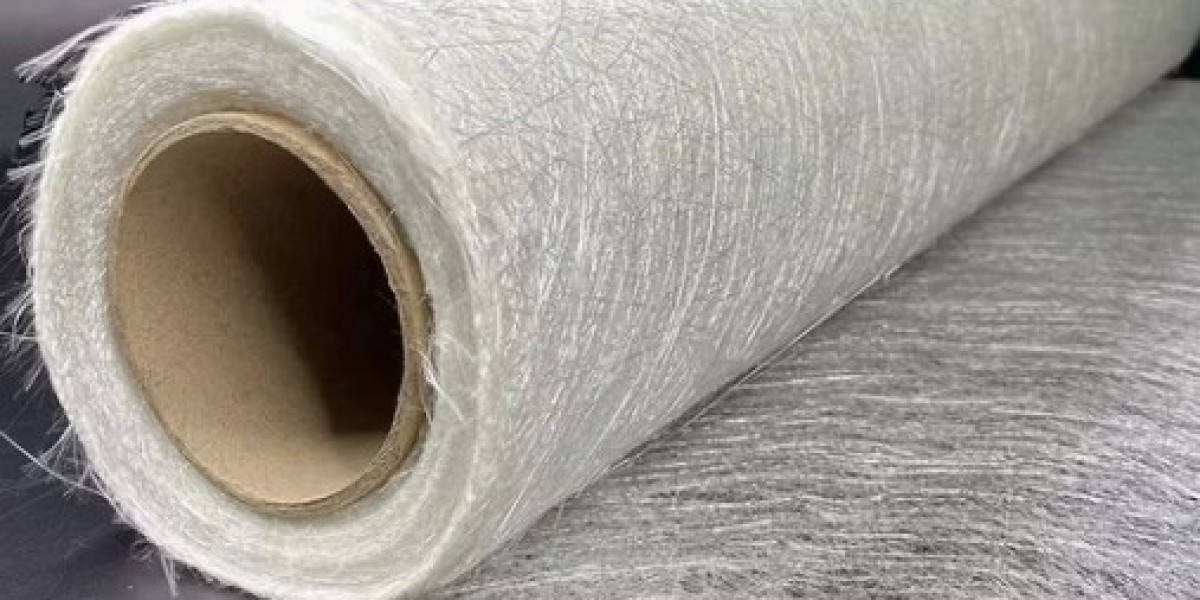
Glass fiber mat is widely considered for applications involving thermal insulation, fire protection, and composite reinforcement. Its nonwoven fiber structure, flexible format, and range of available specifications make it adaptable to different industrial requirements. Understanding its properties and selection criteria can help engineers and procurement teams identify suitable material solutions.
1. Glass Fiber Mat as a Solution for Industrial Thermal Management
Temperature control is a recurring challenge in industrial environments. Equipment such as furnaces, exhaust systems, pipelines, and processing units may experience continuous heat exposure as well as fluctuations during operation.
An appropriate insulation material helps reduce heat transfer, protect surrounding components, and support more stable operating conditions. Glass fiber mat achieves its insulating function through a network of fibers that creates spaces within the material structure, helping limit heat movement.
However, not all glass fiber mats are suitable for the same temperature conditions. Their performance depends on factors such as fiber composition, density, thickness, binder characteristics, and manufacturing method.
When selecting a product for industrial insulation, buyers should distinguish between continuous operating temperatures and short-term temperature resistance. They should also consider vibration, humidity, installation conditions, and possible chemical exposure.
For example, insulation used around industrial pipelines may have different requirements from materials installed inside high-temperature equipment. Evaluating the complete operating environment is therefore more reliable than comparing products solely by their advertised temperature limits.
2. Supporting Composite Manufacturing and Structural Reinforcement
Beyond insulation, glass fiber mat is an important material in the production of fiberglass-reinforced plastic (FRP) and other composite structures.
Manufacturers in transportation, infrastructure, and industrial equipment production often need materials that combine relatively low weight with mechanical strength, corrosion resistance, and design flexibility. Glass fiber reinforcement helps improve the structural properties of composite products without relying entirely on heavier conventional materials.
Unlike fabrics with a specific fiber orientation, randomly distributed fibers in nonwoven glass fiber mat can provide reinforcement in multiple directions. This makes the material suitable for certain molding and laminating processes where multidirectional reinforcement is required.
Material compatibility is particularly important during FRP production. The resin must penetrate the fiber structure properly to achieve effective bonding. Insufficient resin wet-out may lead to dry areas, trapped air, uneven laminate surfaces, and inconsistent finished-product quality.
For this reason, composite manufacturers should evaluate more than the nominal weight of a glass fiber mat. Fiber distribution, binder characteristics, resin compatibility, and processing conditions can all influence the final laminate.
Selecting a suitable material at the beginning of production can help reduce defects and improve manufacturing consistency.
3. Considering Fire Safety in Construction and Industrial Facilities
Fire protection is another area where glass fiber materials are frequently considered. Their thermal properties and characteristics as inorganic fiber materials make them useful in selected insulation and fire-protection applications.
Depending on the product specification and system design, glass fiber mat may be incorporated into building insulation assemblies, fire-resistant partitions, sealing structures, and industrial thermal protection systems.
Nevertheless, material selection for fire-related applications requires careful attention to testing and compliance. The fire performance of an individual material should not be confused with the fire rating of a complete construction assembly.
Factors such as material thickness, installation method, supporting structures, joints, and other system components may affect the overall result. Buyers should therefore request relevant test documentation and confirm that the tested specification corresponds to the intended application.
For engineering projects with specific fire safety requirements, evaluating the complete assembly is essential to avoid relying on general material descriptions that may not reflect actual project conditions.
4. Technical Factors That Influence Glass Fiber Mat Selection
Different industrial applications require different material structures and performance characteristics. Before purchasing glass fiber mat, technical teams should establish clear specifications and discuss them with the manufacturer.
Several factors deserve particular attention:
Fiber composition: E-glass fiber and high-silica glass fiber are designed for different application requirements. Temperature exposure and mechanical conditions should guide the choice.
Basis weight and thickness: These parameters influence material coverage, handling characteristics, insulation properties, and integration into finished products.
Temperature performance: Buyers should clarify whether the specified temperature represents continuous service or short-duration exposure.
Manufacturing process: Wet-laid, dry-laid, and needle-punched processes produce different fiber structures and material characteristics. Selection should reflect the intended application.
Mechanical properties: Tensile strength, flexibility, and dimensional stability affect installation, handling, and performance during use.
Chemical compatibility: Moisture, acids, alkalis, resins, and other substances may influence material suitability depending on the application.
It is also important to consider how the material will be processed after delivery. A glass fiber mat intended for insulation installation may require different characteristics from one used in a composite molding process.
Clear communication of these requirements helps suppliers recommend appropriate specifications and reduces the possibility of material changes after production has started.
5. Zhuowei's Glass Fiber Mat Options for Industrial Applications
Suqian Zhuowei New Materials provides glass fiber mat products for applications involving industrial insulation, fire protection, and reinforcement. Its product range includes E-glass fiber and high-silica glass fiber options, as well as needled nonwoven felt in different specifications.
According to its listed product information, the available needled nonwoven felt specifications include:
| Parameter | Available Range |
|---|---|
| Basis weight | 100–1,200 g/m² |
| Thickness | 3–50 mm |
| Width | 600–2,200 mm |
| Length | Customizable |
These specification options allow buyers to evaluate materials according to equipment dimensions, installation requirements, and manufacturing processes.
For projects involving high-temperature environments or specialized composite production, selecting the appropriate fiber type and material structure is particularly important. Buyers can provide information about operating temperature, required dimensions, exposure conditions, and processing methods to support more accurate product selection.
Rather than choosing a specification based only on standard dimensions, matching the material to its intended working environment can help improve application suitability.
Conclusion
Glass fiber mat serves a range of industrial purposes, from thermal insulation and fire-protection assemblies to composite reinforcement. Its versatility comes from the availability of different fiber compositions, material structures, thicknesses, and manufacturing processes.
However, achieving reliable results depends on selecting a specification that matches the actual application. Temperature conditions, mechanical requirements, resin compatibility, chemical exposure, and installation methods should all be considered during material evaluation.
For manufacturers seeking dependable industrial material solutions, a clear understanding of these factors can support better procurement decisions and more consistent production outcomes. With its E-glass, high-silica glass fiber, and needled nonwoven felt options, Zhuowei provides material choices for different industrial insulation and reinforcement requirements.