
As mRNA-based therapeutics continue to advance, lipid nanoparticles (LNPs) have become an important delivery platform in pharmaceutical research. Their ability to encapsulate and transport nucleic acids makes them relevant to vaccine development, gene delivery, and other emerging therapeutic applications.
Despite their potential, developing an effective LNP formulation remains a complex process. Researchers must investigate different lipid components, adjust formulation ratios, control mixing conditions, and evaluate the physicochemical properties of the resulting nanoparticles. When these experiments rely heavily on manual preparation, maintaining consistency across multiple formulations can become difficult.
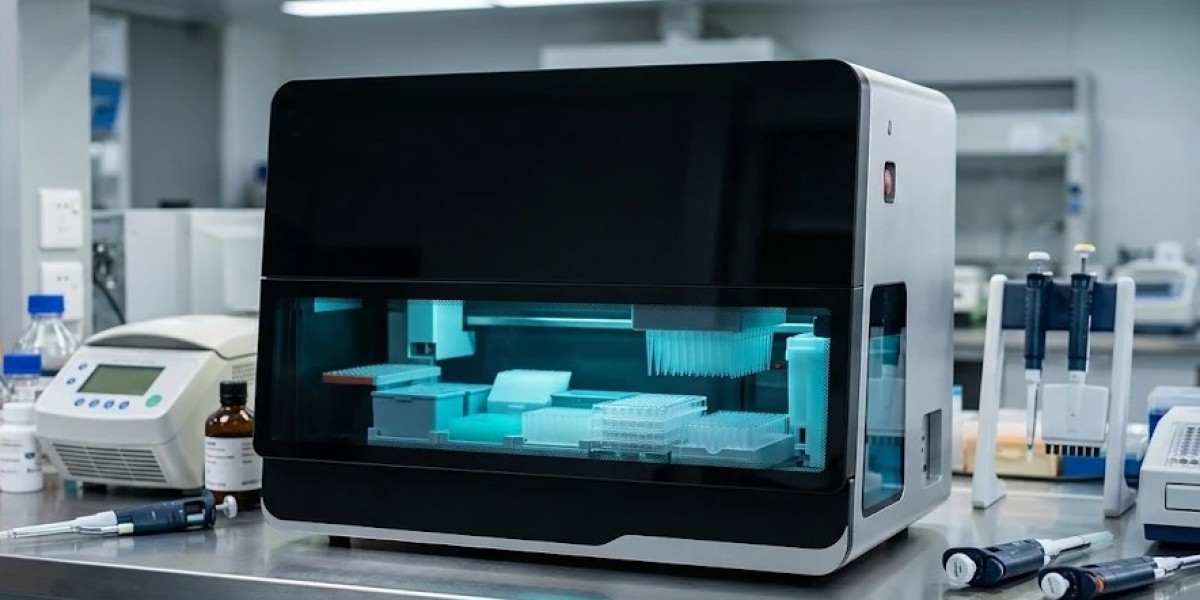
For biotechnology companies and pharmaceutical research laboratories, improving experimental throughput without compromising process control is therefore an important objective. Automated platforms such as the XNano™ HT-Smart from XGen Bio offer an integrated approach to organizing and optimizing mRNA/LNP formulation workflows.
1. Managing Formulation Variables in LNP Research
LNP performance is influenced by several formulation parameters. These commonly include the type of ionizable lipid, the proportions of helper lipids, cholesterol content, PEG-lipid concentration, and the lipid-to-RNA ratio.
Even relatively small changes in composition or preparation conditions may affect important characteristics, including particle size, polydispersity index (PDI), and encapsulation efficiency. These properties are frequently evaluated during formulation development because they help researchers understand the physical consistency and quality of nanoparticle preparations.
A conventional approach may involve preparing samples individually and adjusting one or several parameters at a time. Although this can be suitable for small experiments, it becomes less efficient when researchers need to compare numerous lipid combinations or investigate multiple mRNA sequences.
A high-throughput mRNA/LNP screening system allows researchers to organize these comparisons within a more standardized experimental framework. The XNano™ HT-Smart is designed to support ionizable lipid screening, lipid composition optimization, mRNA sequence screening, and formulation process optimization.
By increasing the number of formulations that can be evaluated within a coordinated workflow, researchers can explore experimental conditions more systematically.
2. Standardizing Lipid Preparation and Nanoparticle Synthesis
In LNP development, the preparation process is closely connected to the characteristics of the final nanoparticles. Differences in lipid preparation, mixing conditions, and sample handling may introduce variability that makes formulation comparisons more difficult.
Automated preparation can help reduce repetitive manual operations and establish more consistent processing conditions.
The XNano™ HT-Smart integrates automated lipid mixing with microfluidic LNP synthesis. According to XGen Bio's product specifications, the workstation can prepare 96 lipid mixtures in less than 30 minutes and synthesize 96 LNP formulations in less than three hours.
Each formulation can be assigned individual preparation parameters, allowing researchers to investigate multiple experimental conditions within the same screening program.
The system also supports a minimum preparation volume of 300 μL per formulation. This is useful during early-stage research, particularly when available mRNA samples or specialized lipid materials are limited. Researchers can conduct parallel formulation evaluations while managing the amount of material required for each experiment.
3. Reducing Sample Transfers Through Integrated Purification
After nanoparticle synthesis, purification is an important part of LNP formulation preparation. Depending on the process, residual ethanol and other formulation-related components may need to be removed, while the sample is transferred into an appropriate buffer for downstream evaluation.
When synthesis and purification are performed using separate procedures, additional sample transfers and manual operations may be required. These steps can increase workflow complexity and create more opportunities for handling-related variability.
The XNano™ HT-Smart incorporates automated in-line purification and buffer exchange into its workflow. Rather than treating purification as an entirely separate operation, the workstation connects it with the formulation preparation process.
This integrated design can simplify sample handling when multiple LNP formulations are being prepared in parallel. It also helps laboratories organize purification procedures more consistently across different experimental groups.
For research teams conducting repeated formulation comparisons, reducing unnecessary transfers can make daily laboratory operations easier to manage.
4. Selecting Appropriate Mixing Configurations for Different Experiments
Mixing conditions are another important consideration in nanoparticle formulation development. Different projects may require different preparation strategies depending on the lipid composition, target particle characteristics, and experimental objectives.
Microfluidic mixing is commonly used in LNP preparation because it provides a controlled environment for combining lipid and aqueous phases. However, researchers may also need to investigate alternative configurations when evaluating process conditions.
The XNano™ HT-Smart supports reusable microfluidic mixers, T-mixers, and customized mixing structures. This provides flexibility for laboratories that need to compare different mixing approaches rather than relying on a single configuration.
Such flexibility is valuable during process optimization, when researchers may investigate how mixing arrangements and preparation parameters influence particle size distribution, PDI, and other formulation attributes.
The appropriate configuration should ultimately be determined by experimental requirements and verified through analytical characterization.
5. Establishing a Development Path from Screening to Scale-Up
Identifying a promising formulation during laboratory screening is an important milestone, but it does not necessarily mean that the process is ready for larger-scale manufacturing.
As development progresses, researchers need to consider whether the selected formulation and preparation conditions can be transferred to subsequent production stages. Differences in equipment configuration, mixing behavior, and processing parameters may influence nanoparticle characteristics during scale-up.
XGen Bio positions the XNano™ HT-Smart as part of a broader LNP development equipment portfolio. According to its product information, formulations screened using this workstation can be further prepared with INano™ and XNano™ scale-up platforms, with the aim of maintaining consistent physicochemical characteristics.
This creates a potential workflow connecting early-stage formulation screening with subsequent process development.
However, scale-up should not be treated as a simple increase in preparation volume. Critical quality attributes, process parameters, and formulation consistency still need to be evaluated and verified at each development stage.
6. Key Considerations When Evaluating an Automated LNP Workstation
Not every laboratory has the same formulation development requirements. Before selecting an automated LNP preparation platform, research teams should consider their experimental workload, sample availability, and downstream analytical capabilities.
The XNano™ HT-Smart may be particularly relevant for projects involving:
High-throughput ionizable lipid screening and comparison.
Optimization of lipid composition and formulation ratios.
Evaluation of multiple mRNA sequences.
Parallel LNP preparation with automated purification.
Investigation of different mixing configurations.
Early-stage formulation development before scale-up.
In addition to its formulation capabilities, the workstation incorporates air filtration, temperature-control modules, UV sterilization, and customizable cleaning processes to support laboratory operations and sample handling.
Laboratories should assess these features alongside formulation volume, throughput, material compatibility, mixing requirements, and analytical testing plans. This helps ensure that the selected equipment fits the actual research workflow rather than simply offering a larger processing capacity.
Conclusion
The development of mRNA-based therapeutics requires efficient and reproducible approaches to LNP formulation screening. As the number of experimental variables increases, manual preparation and disconnected processing steps can make formulation optimization more difficult to manage.
By combining automated lipid preparation, microfluidic LNP synthesis, and in-line purification, the XNano™ HT-Smart provides an integrated platform for high-throughput mRNA/LNP formulation research.
Its support for multiple mixing configurations and compatibility with subsequent INano™ and XNano™ scale-up platforms also offer a pathway from early-stage screening toward further process development. For pharmaceutical and biotechnology laboratories, improving the coordination of these stages can help create a more structured and efficient LNP formulation workflow.
https://www.xgenbiologics.com/accelerating-mrna-lnp-screening-with-xnano-ht-smart.html