
The development of vaccines against opioid-related substances, including fentanyl, heroin, and oxycodone, has attracted increasing attention in biomedical research. Unlike conventional vaccines that target pathogens, opioid vaccines are designed to stimulate the immune system to produce antibodies that recognize specific drug molecules. These antibodies can bind opioids in the bloodstream and potentially reduce the amount of free drug reaching the brain.
However, small-molecule opioids are generally too small to trigger a strong immune response independently. Vaccine developers therefore use hapten-carrier conjugates to improve antigen recognition, while adjuvants help strengthen and shape the resulting immune response.
The selection of an appropriate adjuvant can influence antibody concentration, binding affinity, immune response characteristics, and the overall performance of an opioid vaccine candidate. Several approaches have been investigated, ranging from bacterial toxin-derived adjuvants to synthetic Toll-like receptor agonists and nanoparticle delivery platforms.
1. dmLT: A Detoxified Enterotoxin-Derived Adjuvant
Double-mutant heat-labile toxin (dmLT) is a genetically modified derivative of heat-labile enterotoxin produced by Escherichia coli. It has been investigated as an adjuvant for both mucosal and systemic immunization.
A relevant study published in Pharmaceutics in 2022, titled "An Immunoconjugate Vaccine Alters Distribution and Reduces the Antinociceptive, Behavioral, and Physiological Effects of Fentanyl in Male and Female Rats," examined a fentanyl immunoconjugate vaccine formulated with dmLT.
The research involved a fentanyl-derived hapten conjugated to the carrier protein CRM197. The resulting FEN-CRM conjugate was evaluated with dmLT in preclinical animal models.
Key research findings:
Antibody production: The formulation stimulated the production of fentanyl-specific IgG antibodies.
Reduced brain exposure: Immunization significantly changed fentanyl distribution and reduced the amount of drug reaching brain tissue.
Behavioral and physiological effects: The study reported attenuation of fentanyl-related antinociceptive and behavioral effects, together with changes in physiological responses.
Research significance: The findings support further investigation of dmLT as an adjuvant for hapten-based opioid vaccines.
The study provides preclinical evidence rather than proof of clinical efficacy in humans. The potential translation of this approach depends on additional safety, immunogenicity, and clinical evaluation.
Reference: Pharmaceutics, 2022, 14(11): 2290.
2. INI-4001: Liposomal Delivery of a Synthetic TLR7/8 Agonist
Toll-like receptors are important components of innate immune recognition. Their activation can influence antigen-presenting cells and help establish stronger adaptive immune responses.
INI-4001 is a synthetic lipidated TLR7/8 agonist investigated as an adjuvant for fentanyl vaccine development. A 2025 study published in the Journal of Controlled Release examined how different liposomal formulations affected its performance.
The researchers compared anionic, neutral, and cationic liposomes carrying INI-4001, alongside a conventional aluminum-based formulation. These systems were evaluated in combination with a fentanyl hapten-carrier conjugate.
Key research findings:
Influence of liposome charge: Cationic liposomes demonstrated stronger adjuvant performance than the anionic and neutral formulations evaluated in the study.
Improved immune activation: The cationic formulation enhanced selected immune activation markers, including CD40, CD86, and iNOS expression in macrophages.
Antigen association: Analytical ultracentrifugation indicated stronger association between the F-CRM conjugate and cationic liposomes, providing a possible explanation for the improved immunogenicity.
Preclinical protection: The formulation improved the vaccine's ability to reduce fentanyl-related effects in animal studies.
The findings highlight how delivery-system characteristics can influence adjuvant performance. Rather than considering the immunostimulatory molecule alone, researchers increasingly evaluate the combined effects of adjuvant chemistry, carrier composition, and antigen association.
The study also identifies liposomal formulations as an alternative worth investigating alongside conventional aluminum-based adjuvants. However, their manufacturing stability, storage requirements, and clinical suitability require further assessment.
Reference: Journal of Controlled Release, 2025, Volume 384, Article 113901.
3. MPLA and Liposomal Adjuvant Systems for Bivalent Opioid Vaccines
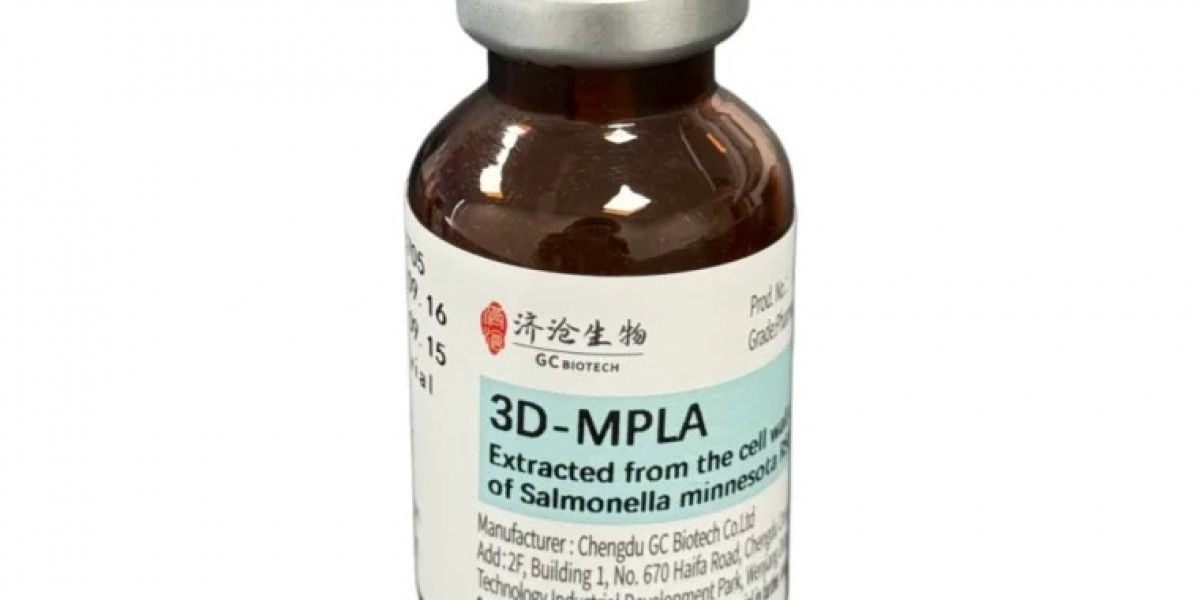
Monophosphoryl lipid A (MPLA) is a TLR4 agonist widely investigated in vaccine adjuvant research. It can stimulate innate immune signaling and support the development of antigen-specific adaptive immunity.
One important application is the development of bivalent vaccines targeting both heroin and fentanyl. This approach addresses a potential limitation of single-target vaccines: exposure to more than one opioid substance may occur in real-world drug use.
A 2021 study published in Bioconjugate Chemistry, titled "Bivalent Conjugate Vaccine Induces Dual Immunogenic Response That Attenuates Heroin and Fentanyl Effects in Mice," investigated a vaccine incorporating two opioid-derived haptens.
The research used:
Heroin hapten: 6-AmHap.
Fentanyl hapten: para-AmFenHap.
Carrier protein: Tetanus toxoid (TT).
Adjuvant formulation: ALF43A, a liposomal formulation containing MPLA and aluminum hydroxide.
Key research findings:
Dual antibody responses: The bivalent formulation generated antibody responses against both heroin-related and fentanyl-related targets.
High antibody titers: The study reported endpoint antibody titers above 10⁵ for the two hapten targets.
Antibody binding characteristics: Competitive immunoassays demonstrated strong binding to heroin-related compounds and fentanyl.
Preclinical protection: Immunized mice showed reduced opioid-related antinociceptive effects, including responses to heroin, fentanyl, and a combination of the two substances.
Treatment compatibility: The study reported no relevant cross-reactivity with methadone or buprenorphine, and naloxone remained effective in the evaluated experimental setting.
This research illustrates the potential value of combining multiple opioid targets within one vaccine strategy. It also demonstrates how liposomal MPLA-containing formulations can contribute to the development of more complex hapten-based vaccine systems.
Nevertheless, these findings remain preclinical and should not be interpreted as evidence that such vaccines can replace established opioid use disorder treatments or emergency overdose interventions.
Reference: Bioconjugate Chemistry, 2021, 32(11): 2295–2306.
4. CpG ODN: Enhancing Immune Responses Through TLR9 Activation
CpG oligodeoxynucleotides (CpG ODNs) are synthetic DNA sequences containing unmethylated CpG motifs. They activate Toll-like receptor 9 (TLR9), which plays an important role in innate immune recognition.
In vaccine research, CpG ODNs are frequently investigated in combination with conventional adjuvants such as aluminum hydroxide. This combination may improve immune stimulation compared with using aluminum-based formulations alone.
A study published in Molecular Pharmaceutics in 2014, titled "Injection Route and TLR9 Agonist Addition Significantly Impact Heroin Vaccine Efficacy," examined the effects of immunization route and CpG ODN supplementation on a heroin conjugate vaccine.
The research used a heroin hapten conjugated to keyhole limpet hemocyanin (KLH), with CpG ODN 1826 evaluated alongside aluminum hydroxide.
Key research findings:
Higher antibody titers: Adding CpG ODN increased antibody responses compared with the aluminum-only formulation.
Improved antibody binding characteristics: The study reported substantial improvements in the measured antibody affinity-related response.
Influence of administration route: Different immunization routes produced different immune response profiles, demonstrating that delivery conditions can influence vaccine performance.
Behavioral protection: Immunized animals showed reduced heroin-related antinociceptive responses in behavioral testing.
An important implication is that adjuvant selection should not be separated from the broader formulation and immunization strategy. The interaction between antigen presentation, innate immune activation, and administration route can all affect the final immune response.
Reference: Molecular Pharmaceutics, 2014, 11(3): 1075–1080.
5. Poly I:C: Potential and Limitations of TLR3 Agonists
Polyinosinic-polycytidylic acid (Poly I:C) is a synthetic double-stranded RNA analogue used in immunological research. It activates TLR3-related signaling and can stimulate type I interferon responses, making it an interesting candidate for vaccine adjuvant development.
Its ability to activate innate immunity has attracted attention in studies involving experimental vaccines, including approaches targeting small-molecule substances.
However, strong immune stimulation does not necessarily translate into a suitable vaccine formulation. Researchers must also consider molecular stability, inflammatory responses, delivery characteristics, and overall tolerability.
Poly I:C and related formulations have been investigated in preclinical research, but their development can be complicated by concerns about systemic inflammatory activity and formulation stability.
This highlights an important challenge in adjuvant development: achieving sufficient immune activation while maintaining an acceptable safety profile.
Other platforms, including CpG ODN, lipidated TLR7/8 agonists such as INI-4001, and MPLA-based formulations, provide alternative approaches for investigating controlled innate immune stimulation.
Related literature:
6. Lipid-Polymer Hybrid Nanoparticles: Exploring Advanced Vaccine Delivery Platforms
Beyond conventional molecular adjuvants, nanoparticle-based delivery systems are receiving increasing attention in vaccine research.
Lipid-polymer hybrid nanoparticles (LPNPs) combine characteristics of lipid-based carriers and polymeric materials. Depending on their composition and design, these systems may offer opportunities to influence antigen delivery, formulation stability, and interactions with immune cells.
A 2025 study published in the International Journal of Toxicology, titled "Safety and Toxicological Evaluation of Subunit Keyhole Limpet Hemocyanin-Loaded Lipid-PLGA Hybrid Nanoparticles (sKLH-hNPs) as a Nanocarrier for an Opioid Use Disorder Vaccine," evaluated the safety characteristics of an sKLH-loaded lipid-PLGA hybrid nanoparticle formulation.
The investigation examined animal behavioral responses, blood biochemical indicators, and tissue histology following exposure to the nanoparticle formulation.
Key research findings:
General tolerability: The study reported few statistically significant differences between the treatment and control groups.
Biochemical assessment: The reported findings did not indicate clear evidence of liver injury, cholestasis, or muscle damage under the evaluated conditions.
Histopathological evaluation: No major treatment-related pathological findings were identified in the examined tissues.
Further development potential: The results provide preliminary safety information for continued investigation of lipid-polymer hybrid nanoparticles as vaccine delivery carriers.
An important distinction is that this research primarily evaluated carrier-related safety endpoints. It does not independently establish the clinical safety or protective efficacy of a complete opioid vaccine.
For future development, researchers will need to assess antigen delivery performance, immune response characteristics, formulation reproducibility, and additional safety parameters.
Reference: International Journal of Toxicology, 2025, 44(5): 395–406.
7. Key Considerations When Selecting Adjuvants for Opioid Vaccine Research
The research discussed above demonstrates that different adjuvant technologies can influence the performance of hapten-based opioid vaccine candidates in different ways.
For vaccine developers, several considerations are particularly important:
Immune response quality
High antibody titers are valuable, but antibody concentration alone does not fully describe vaccine performance. Binding affinity, specificity, and recognition of relevant opioid targets also deserve evaluation.
Adjuvant and antigen compatibility
The interaction between a hapten-carrier conjugate and an adjuvant can influence antigen presentation and immune activation. Compatibility should therefore be assessed as part of the complete formulation.
Delivery system characteristics
Liposomal and lipid-polymer platforms provide additional formulation options. Their physical stability, manufacturing consistency, storage conditions, and suitability for the intended application require systematic evaluation.
Safety and translational potential
Promising animal results do not automatically predict human outcomes. Adjuvant candidates need appropriate toxicological assessment, reproducible manufacturing processes, and clinical evaluation before their potential applications can be established.
Conclusion
Opioid vaccine research is progressing through the investigation of different adjuvant molecules and delivery technologies. dmLT, INI-4001, MPLA, CpG ODN, Poly I:C, and lipid-polymer hybrid nanoparticles represent several distinct approaches to improving immune responses and supporting the development of hapten-based vaccines.
These technologies address different research challenges, including innate immune activation, antibody production, antigen delivery, formulation characteristics, and preliminary safety evaluation. No single platform can be considered universally optimal, as performance depends on the antigen, carrier protein, formulation, and intended application.
GC Biotech provides products and technical services for research and development involving novel vaccine adjuvants. Its offerings include adjuvant raw materials, adjuvant molecules, delivery systems, and vaccine-related research products for preclinical and clinical development.
Through product supply, technical consulting, technology transfer, and collaborative development, GC Biotech supports research organizations and vaccine developers working on new adjuvant formulations and delivery technologies. These capabilities are relevant to a broad range of vaccine research areas, including infectious diseases, allergies, cancer, and other major health challenges.