
Windows play a much bigger role in residential architecture than simply connecting indoor and outdoor spaces. They influence natural lighting, ventilation, temperature regulation, privacy, and even the overall appearance of a building. As modern residential projects increasingly favor clean lines and expansive glass areas, aluminum window systems have become an important option for architects, homeowners, and property developers.
Among the available designs, luxury aluminum casement windows are valued for their contemporary appearance, flexible opening configurations, and compatibility with different architectural styles. However, an attractive frame design does not automatically guarantee good performance. Buyers need to evaluate the complete window system, including glazing, thermal insulation, hardware, sealing, and installation quality.
Before selecting windows for a new home or renovation project, consider the following five factors.
1. Thermal Insulation: How Does the Window Affect Indoor Temperature?
Windows are often one of the areas where heat exchange between indoor and outdoor environments occurs. In summer, solar radiation can increase indoor temperatures, while in colder seasons, heat may escape through poorly insulated glazing and frames.
For this reason, energy-efficient aluminum casement windows should be evaluated according to their complete thermal performance rather than the frame material alone.
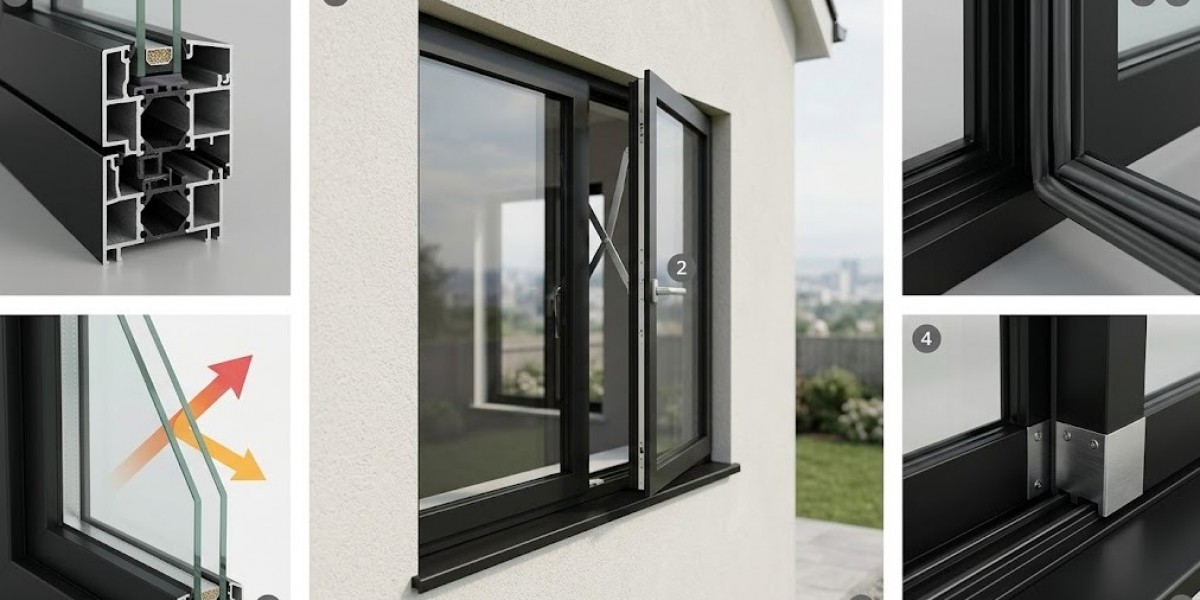
One important feature is the thermal break. Aluminum is naturally a good conductor of heat, so thermal-break technology introduces an insulating barrier between the interior and exterior sections of the frame. This helps reduce heat transfer through the aluminum profile.
Glazing selection is equally important. Depending on the project's location and climate, buyers may consider:
Double-glazed glass: Uses two glass panes separated by an insulating cavity to help reduce heat transfer.
Low-E glass: Features a special coating that helps control radiant heat exchange.
Insulated glass units: Can improve overall thermal performance when combined with suitable frame and sealing systems.
Building orientation and local weather conditions should also influence the final specification. A home with extensive west-facing windows, for example, may have different solar-control requirements from a property in a colder climate.
Rather than relying on general descriptions such as energy-saving or thermal insulated, buyers should request technical data, including U-factor and solar heat gain coefficient (SHGC), where applicable.
2. Opening Design and Ventilation: Making Everyday Spaces More Functional
The opening mechanism is another important consideration when choosing residential windows.
Casement windows are typically attached to the frame with side hinges and operated through a handle or other opening mechanism. Depending on the design, they can open outward or inward, providing flexibility for different room layouts.
Their opening configuration can be useful in bedrooms, kitchens, and living areas where natural ventilation is important. When positioned appropriately, an open casement sash can help direct airflow into the room.
However, the surrounding environment should be considered before selecting an opening direction.
For example, outward-opening windows require sufficient exterior clearance and may not be suitable for every balcony or narrow passage. Inward-opening configurations need adequate interior space to avoid interference with furniture, curtains, and other fixtures.
Hardware quality also deserves attention. Hinges, handles, locking points, and weather seals work together to determine how smoothly the window operates and how securely it closes.
For homeowners seeking long-term convenience, a well-engineered opening system can make a noticeable difference in daily use.
3. Acoustic Performance: Creating a Quieter Indoor Environment
External noise can affect residential comfort, particularly in properties located near highways, commercial districts, airports, or densely populated neighborhoods.
Although aluminum window frames provide structural support, sound insulation depends on several components working together.
Glass configuration is one of the main factors. Different glass thicknesses, laminated glass, and insulated glazing arrangements can influence the amount of external noise transmitted indoors.
The space between glass panes and the overall sealing performance also matter. Even when high-performance glass is selected, poorly sealed frame connections may allow sound to enter through small gaps.
When acoustic comfort is a major project requirement, buyers should consider the following:
Glass thickness and glazing configuration.
Use of laminated or acoustic glass.
Insulation performance of the frame system.
Quality of perimeter seals and installation joints.
Tested acoustic ratings, such as STC or relevant regional equivalents.
It is also important to identify the main noise source. Traffic noise, aircraft noise, and general urban background noise may have different frequency characteristics, so the most suitable glazing solution depends on the actual acoustic requirements.
4. Weather Resistance and Hardware Quality: Looking Beyond Appearance
Residential windows are continuously exposed to environmental conditions. Rain, strong winds, humidity, ultraviolet radiation, and temperature fluctuations can all influence their long-term performance.
For projects in coastal regions or areas with high humidity, corrosion resistance is particularly important. Buyers should examine the aluminum surface treatment, hardware materials, drainage arrangements, and sealing components.
A reliable aluminum casement window system should address several performance requirements:
Air tightness: Properly designed seals help limit uncontrolled air infiltration when the window is closed.
Water resistance: Frame drainage channels and suitable sealing arrangements help manage rainwater and reduce the risk of leakage.
Wind resistance: Profile design, glass specifications, hardware, and fixing methods all contribute to the window's ability to withstand wind pressure.
Corrosion protection: Appropriate surface finishes and hardware materials help maintain performance in demanding environments.
Maintenance should also be part of the purchasing decision. Hinges, locking mechanisms, drainage openings, and rubber seals require periodic inspection and cleaning.
When comparing custom luxury aluminum casement windows, ask manufacturers for relevant test documentation covering air leakage, water penetration, and structural performance. These records provide a more objective basis for comparison than appearance or marketing descriptions alone.
5. Customization, Architectural Compatibility, and Project Planning
One reason aluminum windows are widely used in contemporary residential construction is their adaptability to different architectural designs.
Frame colors, profile dimensions, glass options, opening configurations, and hardware finishes can all influence the final appearance of a property.
For luxury residential projects, window selection should be coordinated with the building's overall design. Large glazed openings may complement minimalist architecture, while carefully selected frame finishes can help connect the exterior facade with interior decoration.
However, customization should not be considered independently of technical performance.
Before placing an order, homeowners, architects, and developers should confirm:
Required window dimensions and opening directions.
Frame profile specifications and surface finishes.
Glass type and thermal requirements.
Hardware configuration and locking arrangements.
Installation details and structural fixing methods.
Production schedules and delivery arrangements.
For large residential developments, early coordination between architects, contractors, and window manufacturers can help prevent dimension conflicts and installation delays.
PINZAO Doors & Windows provides window and door solutions for contemporary building projects. For buyers exploring its aluminum window range, discussing project dimensions, climate conditions, glazing preferences, and performance expectations with the supplier can help identify an appropriate configuration.
Conclusion
Selecting luxury aluminum casement windows requires a balance between architectural design and practical building performance. While frame appearance and customization options influence the visual character of a home, thermal insulation, ventilation, acoustic control, weather resistance, and maintenance determine how well the windows perform over time.
For homeowners and construction professionals, the most effective approach is to evaluate the complete window assembly rather than focus on individual product features. Comparing technical specifications, reviewing samples, and confirming installation requirements before purchasing can help reduce project risks.
With careful product selection and proper installation planning, aluminum casement windows can contribute to a more comfortable, functional, and visually cohesive residential environment. For projects considering customized aluminum window solutions, PINZAO Doors & Windows is a supplier worth consulting about available configurations and project requirements.