
As bicycles, electric bikes, and motorcycles become more connected, riders are increasingly relying on smartphones for everyday functions. Navigation, music playback, incoming calls, and ride-related applications have gradually become part of the modern riding experience.
However, the growing number of connected functions also introduces a usability challenge. Riders need convenient access to their smartphones, but frequently touching a screen or searching for specific controls can interrupt their attention. This has created demand for more practical accessories that bring essential functions closer to the handlebar.
A waterproof Bluetooth remote control offers one possible solution. By providing physical buttons for selected smartphone operations, this type of accessory helps riders manage common functions through a more accessible interface. For bicycle and motorcycle users, the combination of wireless connectivity, outdoor protection, and flexible installation is becoming an interesting direction in two-wheeler accessory development.
1. Why Two-Wheeler Riders Need More Convenient Control Interfaces
The development of connected mobility has changed how people use bicycles and motorcycles. A smartphone can now serve as a navigation system, music player, communication device, and riding information terminal.
Despite these advantages, smartphones are not always convenient to operate while riding. Touchscreen controls generally require visual attention, and small interface elements can be difficult to interact with when wearing gloves.
For commuters, delivery riders, and outdoor cycling enthusiasts, these limitations can become particularly noticeable during longer journeys.
Handlebar-mounted Bluetooth controllers provide an alternative by allowing users to access selected commands through physical buttons. Instead of repeatedly reaching for the phone, riders can use a dedicated accessory to control compatible functions.
The objective is not to eliminate smartphone interaction entirely, but to reduce unnecessary handling and make frequently used operations more accessible. Riders should still prioritize road awareness and follow applicable regulations when using electronic accessories.
2. Outdoor Durability: An Important Requirement for Bluetooth Remote Controls
Unlike many consumer electronic accessories used indoors, bicycle and motorcycle controls operate in constantly changing environmental conditions.
Rain, road spray, dust, vibration, and temperature fluctuations can all affect the service life of handlebar-mounted electronics. A controller that performs well in a controlled environment may not provide the same reliability when exposed to outdoor riding conditions.
This is why waterproof protection is an important consideration when selecting a Bluetooth remote for bicycles and motorcycles.
However, environmental protection involves more than the external enclosure. Buyers should also consider the stability of the mounting structure, button responsiveness, material durability, and resistance to movement during normal riding.
For manufacturers, the challenge is to combine compact dimensions with practical protection and convenient operation. A well-designed waterproof Bluetooth remote control should fit naturally into the riding environment without making the handlebar unnecessarily complicated.
3. Five Physical Buttons for More Direct Operation
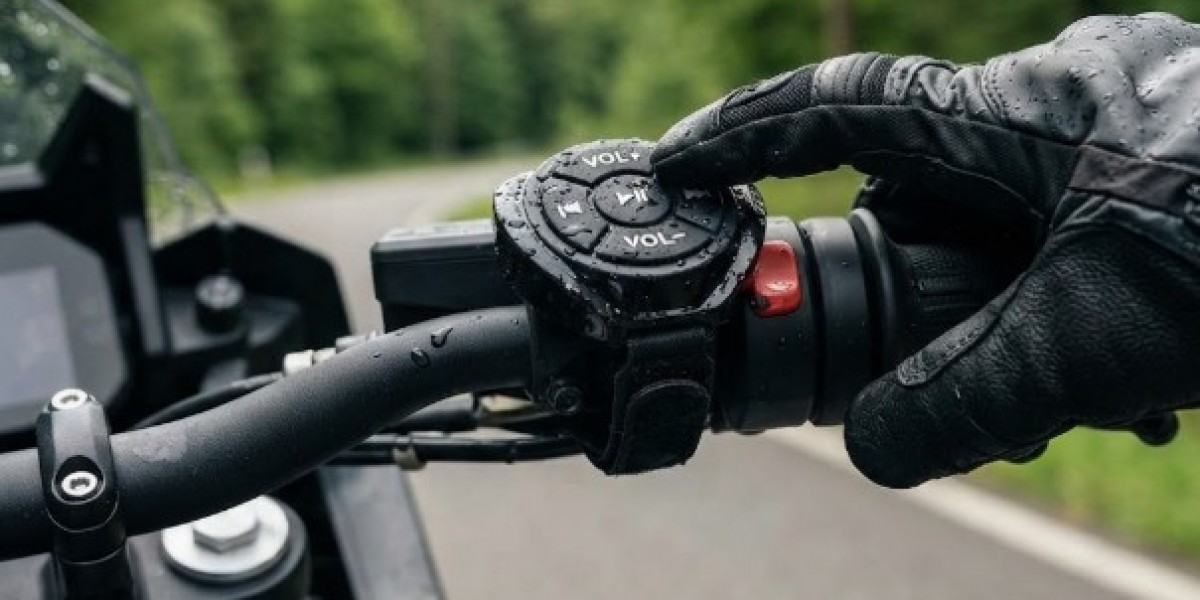
One of the practical design features of the DQX-Q2 Waterproof Bluetooth Remote Control is its five-key configuration.
Compared with touchscreen operation, a physical button layout provides a more straightforward way to access frequently used commands. Depending on smartphone compatibility and the connected application, these controls may support functions such as:
Music playback and pause
Switching between audio tracks
Volume adjustment
Other supported media-control operations
The advantage of a multi-button layout is that different commands can be assigned to separate physical inputs. This can make routine interactions easier to learn and operate.
Button design is particularly relevant for riders who wear gloves or travel in outdoor environments where touchscreen interaction may be inconvenient.
For this type of accessory, usability should be evaluated through button positioning, tactile feedback, control compatibility, and ease of installation rather than simply counting the available functions.
4. Combining a Phone Holder with a Removable Bluetooth Controller
Another consideration in two-wheeler accessory design is how different components work together.
A bicycle or motorcycle phone holder provides a stable mounting position for navigation and other visual information. A Bluetooth remote, meanwhile, offers physical access to selected smartphone functions.
The DQX-Q2 combines a round phone holder with a removable strap-based mounting design, creating a portable accessory arrangement for bicycle and motorcycle handlebars.
This configuration offers several practical considerations:
Flexible installation: A removable strap structure can make installation and removal more convenient for riders who do not want a permanently attached control accessory.
Multiple vehicle applications: Portability can be useful for users who switch between different bicycles, electric bikes, or motorcycles, provided the handlebar dimensions and mounting requirements are compatible.
More organized handlebar space: Combining phone mounting and remote control functions into one accessory arrangement can help reduce the need for multiple independent attachments.
When evaluating this type of product, buyers should also check whether the phone holder provides sufficient stability for their smartphone size and riding conditions.
5. What Should Distributors Consider When Sourcing Bluetooth Handlebar Accessories?
The market for bicycle and motorcycle accessories includes a wide range of mounting systems and electronic control products. For distributors and equipment retailers, selecting the right Bluetooth remote requires evaluating more than its appearance or advertised functions.
Several factors deserve attention.
Environmental protection: Check the product's waterproof and dust-resistance specifications. If a specific IP rating is required, it should be confirmed through the manufacturer's documentation rather than assumed from general waterproof claims.
Bluetooth compatibility: Confirm supported smartphone operating systems, connection methods, and available media-control functions before purchasing.
Mounting flexibility: Consider whether the product is suitable for different handlebar diameters and whether its mounting structure remains stable under normal vibration.
Control ergonomics: Button spacing, tactile response, and accessibility are important factors affecting the actual user experience.
Portability and maintenance: Removable designs may be more convenient for users who frequently change vehicles or need to store accessories separately.
For B2B buyers, these technical details also help determine the product's suitability for different sales channels, including bicycle accessory retailers, motorcycle equipment distributors, and outdoor electronics suppliers.
6. The Future of Bluetooth Accessories in Connected Mobility
The evolution of two-wheeler accessories is closely related to the broader development of connected mobility. As smartphones and wireless devices become more integrated into everyday transportation, users are showing greater interest in accessories that improve convenience without introducing unnecessary complexity.
For bicycles and motorcycles, this means that product development should focus on practical interaction rather than simply adding more electronic functions.
Compact controllers, waterproof enclosures, flexible mounting systems, and intuitive button layouts are all relevant design considerations.
Dongqixing Technology develops vehicle-mounted two-wheeler Bluetooth control products for this growing application area. Its product range includes waterproof media remotes and handlebar control accessories designed around the needs of bicycle and motorcycle users.
The DQX-Q2 reflects this approach through its five-key control layout, round phone holder, removable strap structure, and Bluetooth connectivity. These features make it a relevant option for buyers looking for portable control accessories for outdoor two-wheeler applications.
Conclusion
The increasing use of smartphones in cycling and motorcycle riding has created new opportunities for practical electronic accessories. While navigation and entertainment applications provide additional convenience, accessing them through a touchscreen is not always ideal in an outdoor riding environment.
A waterproof Bluetooth remote control for bicycles and motorcycles provides an alternative through physical buttons, wireless connectivity, and flexible mounting. Features such as the five-key layout and removable phone-holder design can help address everyday requirements for convenient device interaction.
For distributors, retailers, and accessory manufacturers, the important consideration is how well these products combine compatibility, durability, mounting flexibility, and ease of use. As connected mobility continues to develop, simple and practical handlebar control solutions are likely to remain a relevant category in the two-wheeler accessory market.