
Reliable electrical monitoring is essential for maintaining the safety and stability of modern power distribution networks. In industrial facilities, substations, and electrical control systems, engineers need accurate information about current levels to identify abnormal operating conditions and ensure that protective devices respond appropriately. This is where a current transformer (CT) plays an important role.
Although current transformers are widely used in electrical infrastructure, understanding how they operate requires looking beyond their basic measurement function. Their performance also depends on magnetic properties, measurement accuracy, insulation design, and the ability to withstand demanding electrical conditions. For equipment manufacturers and electrical system operators, selecting an appropriate CT is an important part of building a dependable monitoring and protection system.
1. Understanding the Working Principle of a Current Transformer
So, how does a current transformer work in an electrical circuit?
A current transformer is an instrument transformer that converts a high primary current into a smaller, standardized secondary current. This allows measuring instruments, monitoring equipment, and protective relays to operate without being directly connected to high-current circuits.
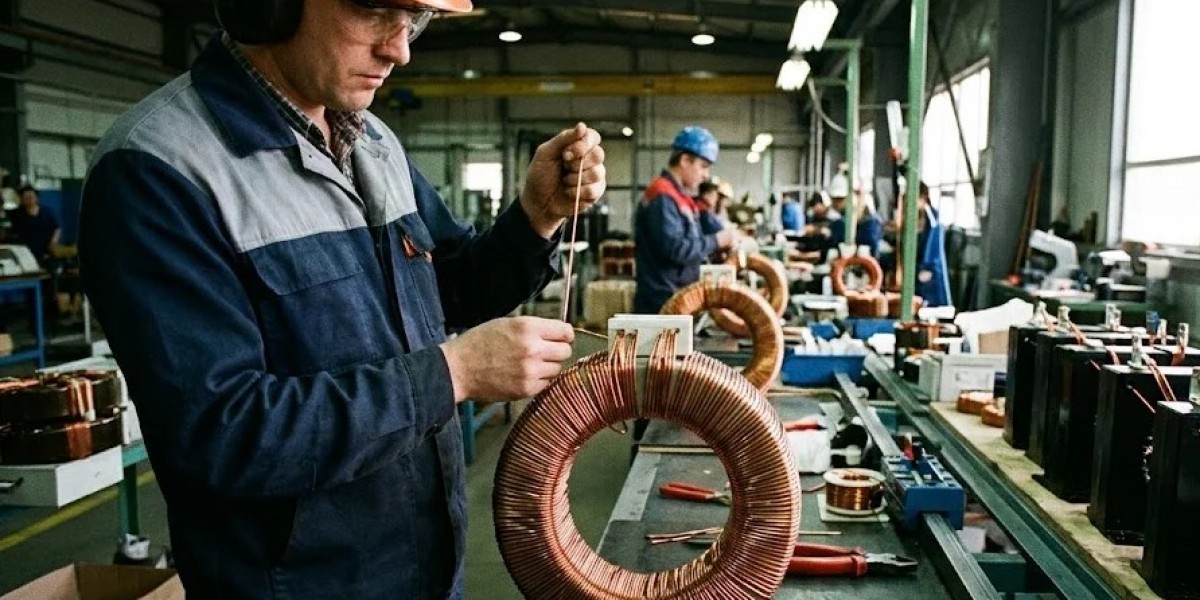
Its basic structure consists of three main components: a primary conductor or winding, a magnetic core, and a secondary winding.
When alternating current passes through the primary conductor, it generates a changing magnetic field around the core. Through electromagnetic induction, this magnetic field produces a proportional current in the secondary winding. The relationship between primary and secondary current is determined by the transformer's turns ratio.
For example, a CT with a 1000:5 ratio converts a primary current of 1000 A into a secondary current of 5 A under its rated operating conditions.
Core material selection is particularly important because it affects magnetic permeability, core losses, and measurement performance. Tianrui's current transformer solutions incorporate advanced magnetic core technologies, including nanocrystalline materials, to support precise current measurement and stable operation in demanding applications.
2. Key Factors That Influence Current Transformer Performance
Choosing a current transformer involves more than matching its rated current to the electrical system. Several technical parameters should be evaluated before installation.
Accuracy Class
Accuracy class indicates the permissible measurement error under specified operating conditions. For applications involving electricity metering, energy management, and industrial monitoring, even relatively small deviations can affect measurement results.
Different applications require different accuracy levels. For example, 0.2S and 0.5S accuracy classes are commonly considered for precision metering applications, subject to the relevant standards and operating conditions.
Rated Burden
The rated burden represents the load that the CT's secondary circuit is designed to support, usually expressed in volt-amperes (VA). Connected meters, relays, wiring, and other devices all contribute to the total secondary burden.
If the actual burden exceeds the specified range, measurement accuracy may deteriorate. Therefore, engineers should consider the complete secondary circuit rather than evaluating the transformer independently.
Thermal and Short-Time Current Capacity
Electrical systems may experience significant current increases during short circuits or other abnormal conditions. A suitable current transformer must withstand the associated thermal and mechanical stresses for the specified duration.
Insulation quality, structural strength, and rated short-time withstand current are therefore important selection criteria, particularly in industrial distribution networks and substations.
3. What Makes a Reliable CT Suitable for Modern Electrical Systems?
As power distribution networks become more automated, current transformers are expected to provide consistent measurement signals under a wider range of operating conditions.
One important consideration is magnetic saturation. When the magnetic core enters saturation, the secondary current may no longer accurately represent the primary current. This can affect the performance of protective relays, especially during fault conditions.
For protection applications, engineers should evaluate the CT's excitation characteristics, accuracy requirements, and appropriate protection class to ensure that it can perform reliably within the intended operating range.
Phase displacement is another consideration. Inaccurate phase relationships between primary and secondary currents can influence power measurement, power factor calculations, and energy monitoring. Proper core design and manufacturing control help maintain the required measurement performance.
Installation requirements also vary between projects. Conventional CT structures may require access to the primary conductor during installation, while split-core current transformers provide an alternative for certain retrofit applications. Their openable core structure can simplify installation around existing conductors without disconnecting the primary circuit, provided the design is suitable for the application.
These factors highlight why current transformer selection should be based on actual system requirements rather than price or rated current alone.
4. Applications in Power Distribution, Metering, and Protection
Current transformers serve several important functions across electrical infrastructure.
In power distribution cabinets, they provide current signals for monitoring instruments and energy management systems. Industrial facilities use CTs to track electrical loads, evaluate equipment operating conditions, and support power consumption analysis.
In substations, current transformers are also essential components of protection systems. They supply current signals to protective relays used in overcurrent, differential, and other protection schemes. When an electrical fault occurs, these signals help the protection system determine whether circuit interruption is necessary.
Different installation environments also require different product configurations. Low-voltage current transformers are widely used in distribution equipment and industrial automation, while outdoor high-voltage CTs must meet more demanding insulation and environmental requirements.
For outdoor applications, factors such as moisture, ultraviolet exposure, temperature variation, and electrical insulation performance should be considered. Epoxy resin insulation is one of the solutions used in certain current transformer designs to provide mechanical support and electrical insulation.
5. Choosing Current Transformer Solutions for Long-Term Reliability
A well-selected current transformer contributes to more than accurate readings. It also supports effective fault detection, equipment protection, and long-term operational stability.
Before purchasing a CT, electrical engineers and procurement teams should review the primary current rating, secondary current rating, transformation ratio, accuracy class, rated burden, insulation level, installation method, and applicable industry standards.
It is equally important to consider the manufacturer's technical capabilities and product range. Tianrui provides current transformer solutions for different electrical measurement and protection requirements, covering low-voltage applications as well as high-voltage outdoor environments.
Matching the transformer design to the actual operating conditions helps reduce measurement errors, improve system compatibility, and support reliable electrical equipment operation.
Conclusion
A current transformer is a fundamental component of modern electrical measurement and protection systems. By converting high primary currents into measurable secondary signals, it enables engineers to monitor electrical loads, analyze system performance, and support protective relay operation.
Understanding how a current transformer works is therefore only the starting point. Accuracy class, burden capacity, magnetic characteristics, insulation performance, and installation conditions all influence its suitability for a particular project.
For industrial users and power distribution professionals, choosing a CT based on these technical requirements is essential to maintaining accurate monitoring and dependable electrical protection. Tianrui's current transformer solutions offer options for a range of low-voltage and high-voltage applications, supporting the measurement and protection needs of modern electrical systems.
https://www.hbtrec.com/how-does-a-current-transformer-work-in-modern-power-grids.html