
Lamination and UV coating are two important finishing processes used in photo studios, digital printing shops, packaging units and commercial printing businesses. Both help improve the appearance and surface protection of printed materials, but they use different methods and equipment.
Choosing the right machine depends on the material you work with, the size of your prints, production volume and the type of finish you want. If you are exploring the types of lamination machines or comparing the UV coating machine price, understanding the available options can help you make a more informed investment.
Different Types of Lamination Machines
Lamination machines are available in different designs and operating systems. Some are suitable for small documents, while others are built for wide-format printing and commercial production.
1. Cold Lamination Machine
A cold lamination machine uses pressure-sensitive adhesive film and rollers to cover printed material without applying heat. It is commonly used by photo studios, advertising agencies and digital printing businesses.
Typical applications include:
Photographs and photo prints.
Vinyl graphics and stickers.
Posters and promotional displays.
Banners and wide-format prints.
Cold lamination is particularly useful for materials that may be affected by heat. The quality of the finish depends on film compatibility, roller pressure and proper feeding.
2. Thermal Lamination Machine
A thermal lamination machine uses heated rollers to bond a compatible laminating film to the printed surface. Heat activates the adhesive layer in the film, helping it attach to the material.
It is commonly used for:
Book covers and printed documents.
Brochures and presentation materials.
Certificates and educational documents.
Commercial printing and packaging work.
The temperature and pressure should be adjusted according to the film and material being processed.
3. Pouch Lamination Machine
Pouch laminators use pre-sealed laminating pouches rather than continuous rolls of film. The document is placed inside a pouch and passed through the machine.
These machines are generally suitable for:
Identity cards.
Certificates.
Small photographs.
Menus and office documents.
They are often preferred by offices, schools, studios and small businesses handling low-volume work.
4. Roll Lamination Machine
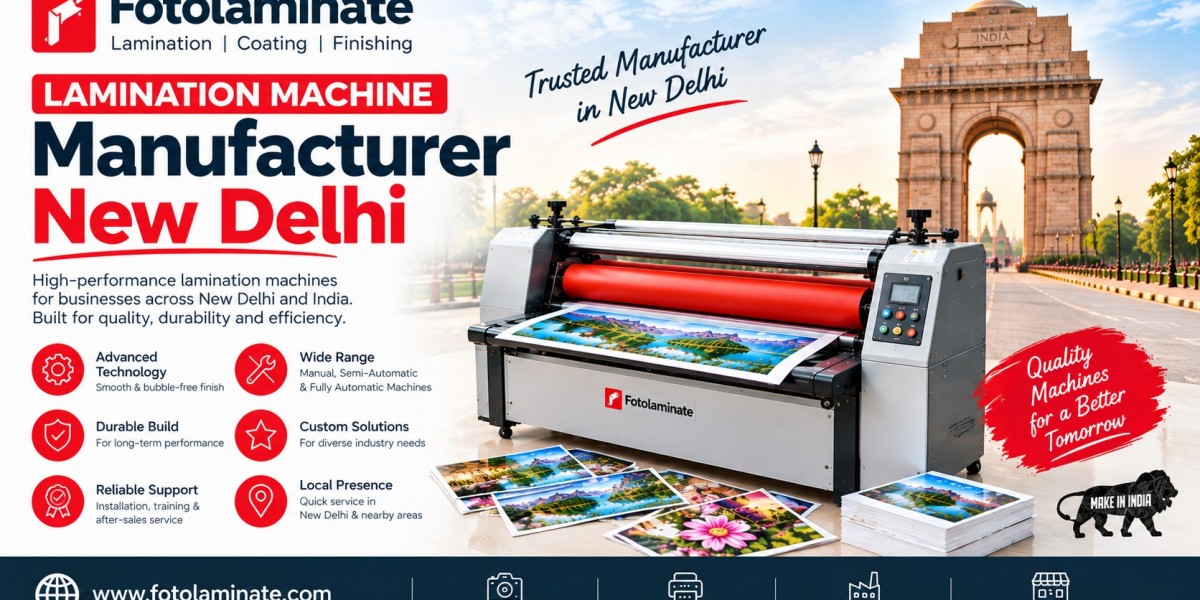
A roll laminator feeds continuous film from rolls through a roller system. It is suitable for larger prints and businesses that regularly process multiple sheets or wide-format materials.
Common applications include posters, photographs, banners and advertising graphics. Working widths vary by model, so buyers should check the usable laminating area before purchasing. <Cite refs={["turn439488search7","turn439488search11"]}/>
5. Flatbed Lamination Machine
Flatbed laminators are designed for specific flat-material laminating applications. Depending on their construction, they can be used for boards, panels and other compatible substrates.
When considering this type, check the working area, pressure arrangement, supported material thickness and feeding method.
6. Automatic Lamination Machine
Automatic lamination machines use powered feeding and other automated functions to reduce manual handling. They can be useful for commercial printing units with regular production requirements.
Some machines combine automation with roll or thermal lamination, so these categories are not always separate. The right configuration depends on the actual production process.
How to Choose the Right Lamination Machine
Before buying equipment, consider the following practical factors:
Material size: Select a machine with sufficient usable width for your regular jobs.
Film compatibility: Confirm which laminating films the machine supports.
Production volume: Match the machine's operating capacity to your daily workload.
Roller quality: Check roller construction, alignment and pressure adjustment.
Operating method: Decide whether manual, motorised or automatic operation is appropriate.
Maintenance: Ask about cleaning, servicing, spare parts and warranty support.
A machine selected according to your actual work requirements can be more useful than choosing one simply because it has a larger advertised capacity.
What Is a UV Coating Machine?
A UV coating machine applies a specially formulated liquid coating to a compatible printed surface. The coating is then cured using ultraviolet light to create a finished layer.
UV coating is commonly used in printing and packaging to enhance the appearance of printed products. Depending on the coating formulation and machine, the finish may be glossy, matte or designed for a specific visual effect.
Common applications include:
Business cards and brochures.
Book covers and promotional materials.
Packaging boxes and labels.
Printed paper and cardboard.
Selected specialty printing products.
Types of UV Coating Machines
Full UV coating machine: Applies coating across the intended surface of a printed sheet or material.
Spot UV coating machine: Applies coating to selected areas, such as logos, headings or design elements, to create contrast.
Automatic UV coating machine: Uses automated feeding and coating arrangements for higher-volume production.
Semi-automatic UV coating machine: Combines machine-assisted coating with some manual handling, making it suitable for certain small and medium-sized production setups.
UV Coating Machine Price: Indicative Market Examples
The UV coating machine price depends on the machine's working size, coating method, automation, curing system and production capacity.
Current supplier listings show a wide variation in advertised prices. The following examples provide a reference for comparing different configurations:
| Machine listing | Advertised price |
|---|---|
| UV spot coating machine, FS-15 × 20 | ₹1,42,000 |
| Spot UV coating machine | ₹1,80,000 |
| 18 × 24-inch UV spot coating machine | ₹2,30,000 |
| Semi-automatic spot UV coating machine | ₹2,40,000 |
| UV and varnish coating machine | ₹2,95,000 |
These are indicative third-party listing prices, not standard industry rates or confirmed quotations. The machines differ in size, features and specifications. <Cite refs={["turn439488search8","turn439488search4","turn439488search1","turn439488search12","turn439488search6"]}/>
For an accurate quotation, ask the supplier about:
Maximum sheet size and coating area.
Full-surface or spot coating capability.
Manual, semi-automatic or automatic operation.
UV lamp and curing specifications.
Supported paper, board and other substrates.
Installation, warranty and maintenance costs.
A lower-priced spot UV machine may be suitable for a small printing setup, while a larger coating system may be required for continuous commercial production.
Choosing a Reliable UV Coating Machine Supplier
When comparing suppliers or manufacturers, do not rely only on the advertised price. Request a machine demonstration and check the coating quality using materials similar to those used in your business.
Also ask whether the manufacturer provides technical assistance, operator training, spare parts and servicing. These details can make a significant difference after installation.
Businesses planning to expand their finishing operations should also consider whether the machine can support their expected future production volume.
Final Thoughts
Understanding the types of lamination machines makes it easier to select equipment for photographs, documents, banners, vinyl graphics and commercial printing. Cold, thermal, pouch, roll and flatbed machines each serve different requirements.
Similarly, the UV coating machine price should be evaluated alongside working size, coating technology, curing system and automation. Comparing specifications and requesting demonstrations before purchasing can help you choose equipment that delivers the right finish for your business.
Frequently Asked Questions
1. What are the main types of lamination machines?
Common types include cold laminators, thermal laminators, pouch laminators, roll laminators, flatbed laminators and automatic laminating machines.
2. Which lamination machine is suitable for photo studios?
Cold and thermal roll laminators are commonly considered for photo studios. The choice depends on the film, photograph size and required finish.
3. What is the difference between cold and thermal lamination?
Cold lamination uses pressure-sensitive adhesive film without heat, while thermal lamination uses heat and pressure to bond compatible film.
4. What is a roll lamination machine used for?
It applies continuous film to printed materials such as posters, banners, photographs and wide-format graphics.
5. What is a UV coating machine used for?
It applies a liquid coating to compatible printed materials and cures it using ultraviolet light.
6. What is the price of a UV coating machine?
Prices vary by size and configuration. Current supplier listings include smaller spot UV models around ₹1.42 lakh and other machines priced above ₹2 lakh.
7. What factors affect UV coating machine prices?
Working size, coating technology, automation, curing system, production capacity and manufacturer support influence the price.