
Modern industrial systems rely on dependable electrical connections to maintain performance, safety, and operational efficiency. From automated manufacturing facilities to marine equipment and outdoor monitoring systems, electrical components must withstand challenging environmental conditions.
Moisture, dust, vibration, and temperature fluctuations can damage conventional connectors, causing electrical failures and costly downtime. Watertight connectors provide a reliable solution by protecting electrical connections against water intrusion and supporting stable signal or power transmission in demanding environments.
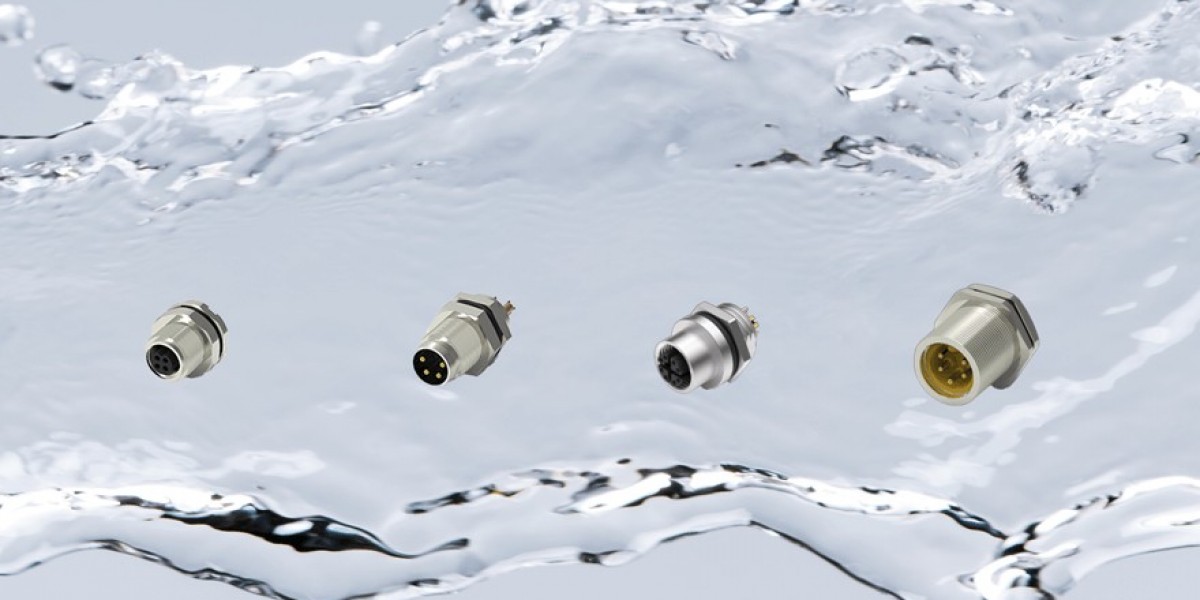
Round Compact 2-8 Core Watertight Connectors are designed for applications that require secure electrical connections in a compact form. Their circular construction, multiple core configurations, and sealing capabilities make them suitable for different industrial installations.
Depending on their specifications, these connectors can support power distribution, control signals, and communication systems across a wide range of equipment.
Applications in Industrial Automation
Industrial automation depends on the accurate transmission of electrical signals between sensors, controllers, actuators, and other equipment. Manufacturing facilities often contain machinery exposed to lubricants, cleaning liquids, humidity, and airborne contaminants. These conditions can affect unprotected electrical connections and interrupt automated processes.
Watertight connectors help maintain reliable connections in environments where moisture protection is essential. They can be used to connect proximity sensors, position sensors, limit switches, and other monitoring devices to control systems. Their compact design is particularly useful in installations where multiple components must fit within a limited space.
Different core configurations allow engineers to select a connector that matches the electrical requirements of specific equipment. A smaller configuration may suit a basic sensor, while connectors with additional cores can accommodate more complex wiring arrangements, subject to their electrical ratings and pin assignments.
By selecting appropriate connectors, manufacturers can simplify installation, support maintenance activities, and reduce the risk of connection-related interruptions.
Use in Marine and Offshore Equipment
Marine and offshore environments present some of the most challenging conditions for electrical components. Saltwater spray, high humidity, changing temperatures, and continuous exposure to moisture can accelerate corrosion and damage electrical contacts.
Round Compact 2-8 Core Watertight Connectors can be suitable for marine equipment when their sealing, corrosion resistance, and electrical ratings meet the application's requirements. Potential uses include marine monitoring instruments, navigation-related equipment, underwater sensing systems, and control panels installed in exposed locations.
In offshore facilities, dependable connections are important for monitoring equipment, pumps, instrumentation, and other electrical systems. A properly selected watertight connector helps protect contact points from environmental exposure and supports consistent equipment operation.
However, not every watertight connector is designed for permanent underwater immersion. Engineers should verify the specified IP rating, operating depth where applicable, pressure resistance, material compatibility, and corrosion protection before choosing a connector for marine or subsea installations.
Applications in Outdoor Monitoring Systems
Outdoor industrial installations frequently expose electrical equipment to rainfall, condensation, dust, and temperature variations. Examples include environmental monitoring stations, remote sensors, industrial weather equipment, and infrastructure monitoring devices.
Reliable electrical connections are essential because outdoor equipment may operate in locations where regular maintenance is difficult or expensive. A damaged connection can interrupt monitoring activities and prevent operators from receiving important system information.
Compact watertight connectors help protect electrical interfaces when installed according to the manufacturer's instructions. Their circular shape can support secure mating arrangements, while suitable sealing components help prevent moisture from reaching electrical contacts.
These connectors may be used in monitoring systems that measure temperature, humidity, pressure, vibration, or other operating conditions. The appropriate number of cores depends on the sensors, power supply, and signal requirements involved.
For outdoor applications, engineers should also consider ultraviolet exposure, temperature limits, cable-jacket compatibility, and resistance to environmental contaminants.
Integration with Industrial Machinery
Industrial machinery contains numerous electrical connections that must remain stable during continuous operation. Pumps, compressors, packaging machines, processing equipment, and production-line systems often require connectors that can tolerate vibration and exposure to liquids.
Watertight connectors can support electrical connections between removable machine components, sensors, and control assemblies. Their compact dimensions help engineers organize wiring in equipment with limited installation space.
A properly selected connector can also make equipment servicing more convenient. Instead of permanently joining every cable, technicians may be able to disconnect compatible assemblies during inspection or component replacement. This can reduce maintenance complexity when the connector design supports repeated mating cycles.
Mechanical security remains important in these installations. Vibration resistance, coupling design, cable strain relief, and contact retention should all be considered alongside moisture protection.
The connector's current and voltage ratings must also match the connected equipment. Using a connector outside its specified limits can cause overheating, unreliable performance, or premature component failure.
Applications in Robotics and Mobile Equipment
Robotics and mobile industrial equipment require electrical connections that can accommodate movement, vibration, and restricted installation spaces. Robotic arms, automated guided vehicles, mobile inspection systems, and material-handling equipment may operate in environments where dust or moisture is present.
Compact connectors can help reduce wiring bulk and support organized electrical layouts. Depending on their design, they may connect sensors, control modules, small actuators, and communication interfaces.
The availability of different core counts provides flexibility when designing connections for individual subsystems. Nevertheless, selecting the correct connector requires careful consideration of signal types, power requirements, cable movement, and mechanical loading.
Applications involving repeated bending or continuous movement may require specialized flexible cables and connectors designed for dynamic service. A watertight seal alone does not guarantee resistance to repeated flexing or mechanical stress.
Regular inspections can help identify damaged seals, loose couplings, worn contacts, or cable deterioration before these problems affect equipment operation.
Use in Industrial Communication Systems
Modern industrial facilities increasingly depend on interconnected devices that exchange information in real time. Sensors, controllers, monitoring equipment, and network-enabled machinery all require dependable electrical interfaces.
Watertight connectors may be incorporated into communication systems installed in wet or dusty environments, provided their electrical characteristics support the required signals. Depending on the connector design, applications may include sensor networks, control interfaces, and communication links between industrial components.
Core configuration, contact arrangement, shielding, and signal integrity are particularly important when transmitting sensitive or high-speed data. Engineers should confirm compatibility with the intended communication protocol rather than assuming that every multi-core connector supports Ethernet or other high-speed networks.
Correct cable termination and installation practices are equally important. Poorly assembled connections can introduce signal interference, increase resistance, or compromise environmental sealing.
Choosing connectors designed for the intended communication and environmental conditions helps create more dependable industrial networks.
Applications in Water Treatment and Processing Plants
Water treatment facilities and industrial processing plants use pumps, valves, flow meters, level sensors, and automated control equipment. These systems may be installed near water channels, chemical processing areas, washdown stations, or humid equipment rooms.
Watertight connectors can help protect electrical interfaces used by monitoring and control devices in these locations. They may support connections for level detection, pressure monitoring, equipment status signals, and other instrumentation.
Chemical compatibility is especially important in processing environments. Seal materials, connector housings, and contact finishes should be selected according to the chemicals, cleaning agents, and temperatures encountered during operation.
The installation environment should also determine the required level of protection. Occasional splashing, high-pressure washdown, and continuous immersion represent different operating conditions and require appropriate connector specifications.
A carefully designed connection system helps reduce maintenance demands and supports reliable monitoring throughout industrial processes.
Benefits of Compact Connector Design
Compact watertight connectors offer several practical advantages for industrial equipment manufacturers and system integrators.
Space efficiency: Smaller connector dimensions help accommodate crowded electrical enclosures and compact machinery.
Flexible configurations: Different core counts can support a variety of power and signal requirements.
Environmental protection: Suitable sealing systems help prevent moisture and contaminants from reaching electrical contacts.
Maintenance convenience: Compatible detachable connections can simplify equipment inspection and replacement.
Installation flexibility: Circular connector designs can support organized cable routing in different equipment layouts.
These benefits depend on selecting a product that meets the specific operating requirements. Engineers should assess electrical ratings, ingress protection, temperature limits, mechanical durability, and applicable industry standards before finalizing a design.
Why Choose Hysfsubsea for Watertight Connector Solutions?
Hysfsubsea specializes in watertight connector solutions for demanding applications where dependable electrical connections and environmental protection are important. Its connector product range includes options intended for different industrial and subsea requirements. More visit: https://hysfsubsea.com/
When evaluating products from Hysfsubsea, buyers should review the available core configurations, sealing specifications, contact arrangements, materials, and electrical ratings to identify a suitable solution.
Matching the connector to the actual installation environment helps support reliable operation in industrial automation, marine equipment, monitoring systems, and other applications where moisture protection is necessary.
Conclusion
Watertight connectors play an important role in improving the reliability of electrical systems operating in challenging industrial environments. Their applications extend across automation, marine equipment, outdoor monitoring, robotics, industrial communication, and water treatment facilities.
By combining suitable sealing technology with compact construction and appropriate electrical configurations, Round Compact 2-8 Core Watertight Connectors can help protect critical connections and simplify equipment integration.