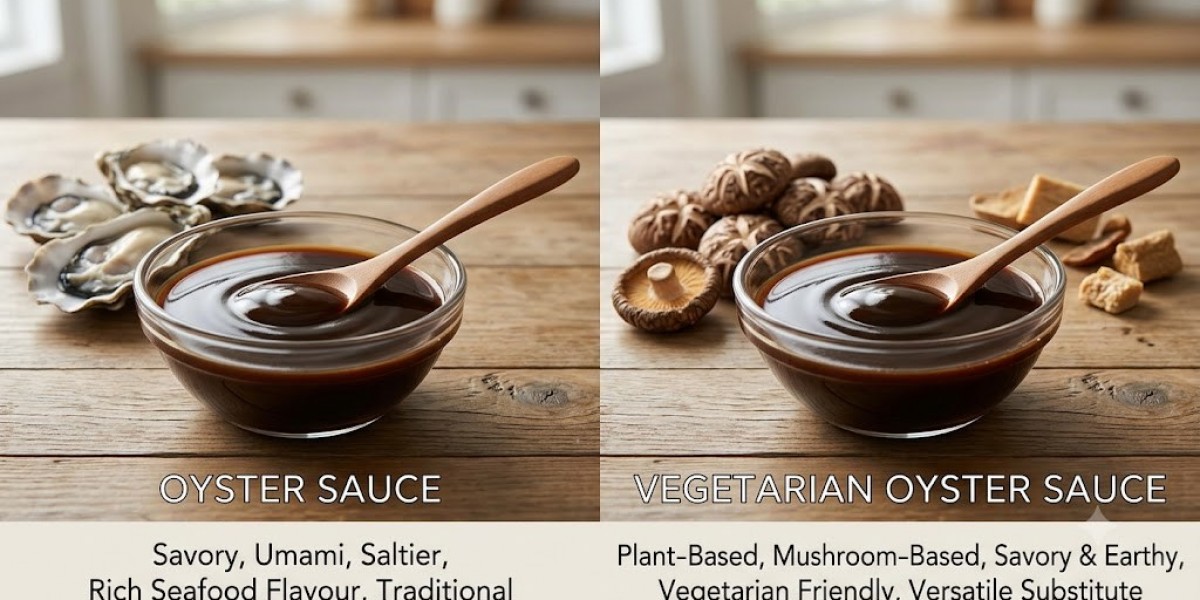

Oyster sauce is a popular ingredient in Asian cooking, known for its rich, savoury flavour and thick, glossy texture. It is commonly used in stir-fries, noodle dishes, marinades, and vegetable preparations. However, traditional oyster sauce is made using oysters, which means it is not suitable for vegetarians.
That is where vegetarian oyster sauce comes in. Designed to recreate some of the deep, savoury qualities of traditional oyster sauce without using oysters, it offers an alternative for people following vegetarian or plant-based diets.
But are the two sauces identical? Can you substitute vegetarian oyster sauce in any recipe? And what should you check on the label before buying one?
This guide explains the differences between oyster sauce and vegetarian oyster sauce, their ingredients, flavour profiles, uses, and how to choose the right option for your kitchen.
What Is Oyster Sauce?
Oyster sauce is a thick, savoury condiment traditionally made using oyster extracts or oyster-based ingredients, along with other components such as sugar, salt, and starch. Depending on the product, it may also contain soy sauce, flavour enhancers, or additional seasonings.
The sauce is known for its deep umami flavour, mild sweetness, dark colour, and syrupy consistency. It adds a savoury finish to dishes without necessarily making them taste strongly of seafood.
Oyster sauce is widely used in several Chinese and Southeast Asian cooking traditions. Common applications include:
Vegetable stir-fries
Fried rice
Chow mein and other noodle dishes
Mushroom dishes
Tofu preparations
Meat and seafood marinades
Stir-fried greens
Sauces and gravies
Traditional oyster sauce contains oyster-derived ingredients, so it is not vegetarian, even if the finished sauce does not have a strong seafood taste.
What Is Vegetarian Oyster Sauce?
Vegetarian oyster sauce is a savoury sauce developed to provide a similar cooking function and flavour profile without using oysters.
Many versions use mushrooms, especially shiitake mushrooms, to create a deep, earthy umami flavour. Other ingredients may include soy sauce, sugar, salt, starch, vegetable-based flavourings, and seasonings.
However, ingredients vary by manufacturer. Some vegetarian oyster-style sauces rely primarily on mushrooms, while others use different combinations of plant-derived ingredients.
Vegetarian oyster sauce is commonly used in:
Vegetable stir-fries
Tofu and mushroom dishes
Fried rice
Asian noodle recipes
Vegetable gravies
Marinades
Sauces for steamed vegetables
Plant-based versions of restaurant-style Asian dishes
It provides a convenient way to add savoury depth to vegetarian cooking without using traditional oyster sauce.
Oyster Sauce vs Vegetarian Oyster Sauce: Key Differences
The biggest difference is the source of the savoury flavour. Traditional oyster sauce contains oyster-derived ingredients, while vegetarian oyster sauce is formulated without oysters.
1. Ingredients
Traditional oyster sauce: Usually contains oysters or oyster extract, alongside seasonings and thickening ingredients.
Vegetarian oyster sauce: May use mushrooms, soy-based ingredients, vegetable-derived flavourings, starch, and seasonings.
Always check the ingredient list rather than relying only on the product name. If you are avoiding all animal-derived ingredients, look for clear vegetarian or vegan labelling and verify the manufacturer's ingredient information.
2. Flavour
Traditional oyster sauce generally has a rounded, savoury umami flavour with mild sweetness. Depending on the product, it may also have subtle seafood notes.
Vegetarian oyster sauce often has a more earthy, mushroom-forward flavour. It can still provide considerable savoury depth, although the exact taste depends on its ingredients and formulation.
Neither version tastes exactly the same across all brands, so the best choice depends on your recipe and personal preference.
3. Texture and Colour
Both sauces are commonly thick, dark, and glossy, making them useful for coating vegetables, noodles, and other ingredients.
However, thickness and colour can vary by product. Some vegetarian alternatives may be thinner, sweeter, or more strongly flavoured than traditional oyster sauce.
If you are substituting one for the other, start with a similar quantity and adjust the sauce according to taste and consistency.
4. Suitability for Vegetarians
Traditional oyster sauce is not vegetarian because it contains oyster-derived ingredients.
Vegetarian oyster sauce is intended to provide an alternative without oysters. Nevertheless, vegetarians should check the full ingredient list and any relevant allergen or dietary information.
A product labelled vegetarian is not automatically vegan. If you follow a strict vegan diet, verify that it contains no other animal-derived ingredients.
5. Typical Uses
Both sauces can be used to add savoury depth to stir-fries, noodles, rice dishes, and vegetable preparations.
Vegetarian oyster sauce is particularly useful when adapting recipes that traditionally call for oyster sauce. It can help create a similar style of savoury coating in mushroom stir-fries, tofu dishes, and vegetable noodles.
The result may not be identical to a dish made with traditional oyster sauce, but it can still be flavourful and satisfying.
Can You Substitute Vegetarian Oyster Sauce for Oyster Sauce?
Yes. In many recipes, vegetarian oyster sauce can replace traditional oyster sauce.
For a basic substitution, start with the same quantity specified in the recipe. Taste the dish before adding more, as sweetness, saltiness, and intensity can differ between brands.
Here are a few practical examples.
Vegetable Stir-Fry
Add vegetarian oyster sauce towards the end of cooking, after the vegetables have been stir-fried. Toss well to coat the ingredients.
It works particularly well with mushrooms, broccoli, beans, cabbage, bok choy, and bell peppers.
Fried Rice
Stir a small amount into fried rice after the vegetables and rice have been combined. Mix thoroughly so the sauce is distributed evenly rather than collecting in one spot.
Balance it with other seasonings carefully, especially if you are also using soy sauce.
Noodles
Vegetarian oyster sauce can add savoury depth to Hakka noodles, chow mein, and other Asian-inspired noodle dishes.
Combine it with garlic, ginger, soy sauce, and a little water to make a simple stir-fry sauce. Adjust the proportions to suit the noodles and vegetables you are using.
Tofu Dishes
Pan-fried tofu pairs well with a mushroom-based vegetarian oyster sauce. Toss the tofu with the sauce and vegetables for a quick meal that can be served with rice or noodles.
Mushroom Stir-Fry
Mushrooms naturally provide an earthy, savoury flavour, making them a particularly good match for mushroom-based vegetarian oyster sauce.
Stir-fry mushrooms with garlic, vegetables, and a little sauce for a simple side dish or noodle topping.
Is Vegetarian Oyster Sauce the Same as Mushroom Sauce?
Not necessarily.
Mushroom sauce is a broad category that can include different ingredients, consistencies, and flavour profiles. Vegetarian oyster sauce is a more specific type of oyster-style condiment intended to deliver a concentrated savoury flavour similar to traditional oyster sauce without using oysters.
Some vegetarian oyster sauces are mushroom-based, but not every mushroom sauce is designed as a direct substitute for oyster sauce.
When shopping, check the product description, ingredients, and suggested uses to determine whether a sauce is suitable for your recipe.
Is Vegetarian Oyster Sauce Healthy?
The word vegetarian describes the sauce's ingredient suitability, not its overall nutritional profile.
Vegetarian oyster sauce can contain salt, sugar, starch, and other seasonings. Nutritional values vary considerably by brand, so check the nutrition label if you are monitoring sodium, sugar, or calorie intake.
It is best used as a seasoning rather than as the main component of a meal. A small quantity can add flavour to vegetables, tofu, rice, and noodles.
Remember that a vegetarian sauce is not automatically low in sodium or sugar. The product's nutrition information is the most reliable guide.
What Should You Check Before Buying Vegetarian Oyster Sauce?
If you want a sauce suitable for vegetarian cooking, consider these factors before purchasing.
Read the Ingredient List
Look for a product that does not contain oyster extract, fish sauce, or other animal-derived ingredients you want to avoid.
Mushrooms, soy-based ingredients, and plant-derived seasonings are common in vegetarian oyster-style sauces, but formulations vary.
Check Vegetarian or Vegan Labelling
Choose a product with clear dietary labelling. If you follow a vegan diet, check for other animal-derived ingredients as well.
Review Allergen Information
Some sauces contain soy, wheat, or other allergens. If you have a food allergy or intolerance, read the allergen statement carefully.
Consider the Flavour Profile
A mushroom-forward sauce may suit vegetable stir-fries, tofu, and noodle dishes. If you prefer a milder flavour, check the product description and begin with a small amount when cooking.
Check the Consistency
A thick sauce can coat vegetables and noodles well, while a thinner sauce may be better suited to certain gravies or marinades. You can adjust consistency with a little water when cooking.
For more options to stock your kitchen, explore the Moi Soi collection of Asian sauces.
Other Vegetarian Alternatives to Oyster Sauce
If you cannot find vegetarian oyster sauce, several other ingredients can help add savoury flavour to your cooking. These alternatives will not taste exactly the same, but they can work in many recipes.
Soy sauce: Adds saltiness and umami. Use it carefully because it can be saltier and thinner than oyster sauce.
Mushroom soy sauce: Can provide a deep, earthy flavour, depending on the product.
Miso paste: Adds savoury depth and works well in some sauces, dressings, and marinades. Dissolve it properly and adjust the salt in the rest of the recipe.
A mushroom-based stir-fry sauce: Can be a convenient substitute if its flavour and consistency suit the dish.
Homemade mushroom sauce: Cook finely chopped mushrooms with garlic, soy sauce, a little sugar, and water. Thicken with a small cornflour slurry if required.
Choose an alternative based on the recipe rather than assuming all savoury sauces can be substituted in equal quantities.
Final Verdict: Which Sauce Should You Choose?
The choice between oyster sauce and vegetarian oyster sauce depends on your dietary preferences and cooking needs.
Traditional oyster sauce contains oyster-derived ingredients and provides a distinctive savoury flavour commonly used in Asian cooking. Vegetarian oyster sauce offers an alternative for people who want a similar style of flavour without oysters, often using mushrooms and other plant-based ingredients.
For vegetarian stir-fries, tofu, fried rice, and noodles, vegetarian oyster sauce can be a practical option. Just remember that the flavour, sweetness, saltiness, and thickness can differ by brand.
Check the ingredient list, dietary labels, and allergen information before buying. Once you find a sauce that suits your taste, you can use it in a variety of everyday Asian-inspired recipes.
Explore the Moi Soi Asian sauces collection to discover sauces and condiments for your home cooking.
Frequently Asked Questions
1. Is oyster sauce vegetarian?
Traditional oyster sauce is not vegetarian because it contains oysters or oyster-derived ingredients. Vegetarian oyster sauce is formulated without oysters, but you should still check its ingredient list.
2. What is vegetarian oyster sauce made from?
Many versions use mushrooms, soy-based ingredients, starch, sugar, salt, and seasonings. Ingredients vary by brand, so check the product label for the exact formulation.
3. Does vegetarian oyster sauce taste like oyster sauce?
It can provide a similar savoury, umami-rich flavour, but the taste is not identical. Mushroom-based alternatives may have a more earthy flavour.
4. Can I use vegetarian oyster sauce in fried rice?
Yes. Add a small amount while stir-frying the rice and vegetables, then mix thoroughly. Adjust other seasonings to account for the sauce's saltiness.
5. Is vegetarian oyster sauce vegan?
Not always. Vegetarian products may contain ingredients that some vegans avoid. Check for clear vegan labelling and review the complete ingredient list.
6. What can I use instead of vegetarian oyster sauce?
Soy sauce, mushroom soy sauce, miso-based seasonings, or homemade mushroom sauce can work in some recipes. Choose according to the flavour and consistency required.