
At the beginning of a career, success can appear relatively straightforward.
Work hard. Develop expertise. Make good decisions. Build relationships. Create value.
But as responsibility increases, the nature of success changes.
A leader may eventually become responsible for an organization rather than simply a role. A founder may move from building a business to building an institution. A high-income professional may discover that greater financial capacity brings greater structural complexity. A philanthropist may realize that meaningful giving involves much more than deciding where capital should go.
At this level, performance remains important—but it is only one part of the equation.
The structures surrounding performance begin to matter just as much.
Governance, incentives, economic systems, institutional relationships, compliance, and decision architecture can quietly influence what happens next. Understanding these forces requires a different form of thinking: structural clarity.
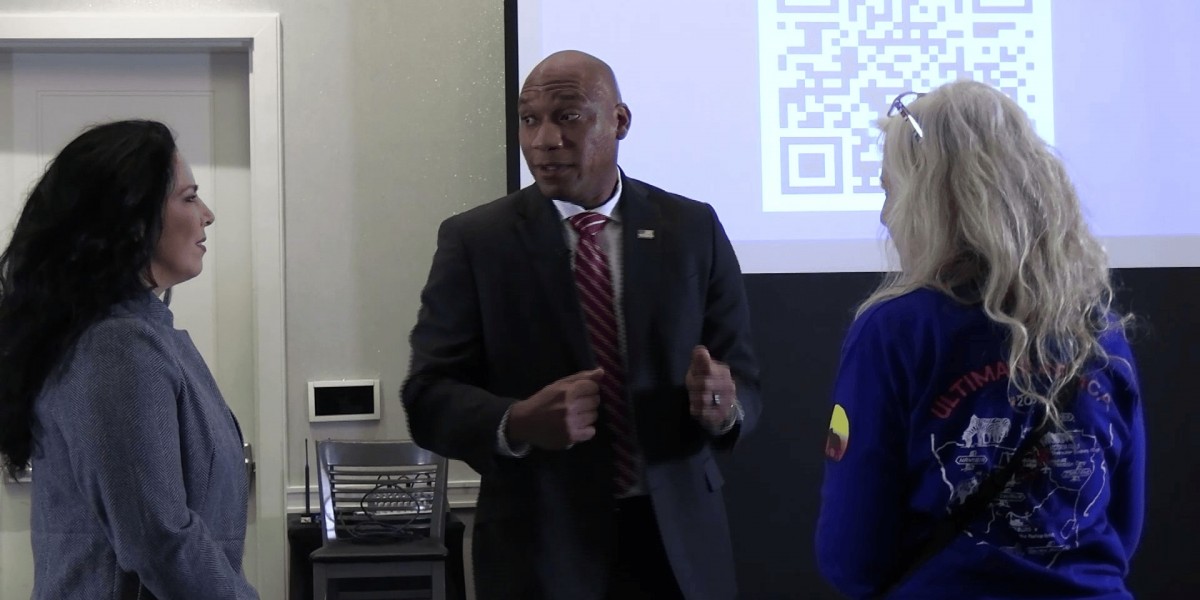
Antomius Wise brings this perspective into keynote engagements, workshops, executive education, and private executive conversations designed for leaders operating within increasingly complex environments.
The Problem Beneath the Problem
Many leaders are trained to identify visible problems.
Revenue is not where it should be. A team is not aligned. A philanthropic initiative is not producing the expected impact. An organization is growing faster than its existing systems can support.
The natural response is to address the immediate issue.
But sometimes the visible problem is only the result.
The deeper question is what created the conditions for that result in the first place.
An incentive structure may be influencing behavior. A governance model may be creating unnecessary friction. A decision-making process may be based on assumptions that are no longer relevant. Economic conditions may be shaping outcomes in ways that are difficult to recognize from inside the organization.
This is why structural clarity matters.
Instead of examining only what happened, leaders can examine why the environment produced what happened.
That shift can change the quality of the conversation.
Seeing What Is Usually Overlooked
Structural forces are often difficult to recognize because they are embedded within everyday operations.
People see meetings, policies, transactions, organizational charts, investments, decisions, and outcomes.
What they may not immediately see are the relationships connecting them.
Who possesses authority?
How are incentives established?
Where does accountability reside?
What assumptions influence capital decisions?
Which structures support long-term objectives?
Which structures unintentionally reinforce short-term behavior?
These questions move leadership beyond surface-level problem solving.
They encourage institutional thinking—the ability to understand how individual decisions interact with larger systems.
For executive teams, this perspective can create more informed conversations around governance and incentives. For entrepreneurs, it can help shift attention from building a successful company toward building an organization capable of lasting. For wealth advisors and trust networks, it can provide an educational framework for discussing structural considerations with the people they serve.
A Different Conversation About Wealth
Financial capacity can create opportunities, but it can also introduce complexity.
As individuals and families accumulate resources, questions around governance, legacy, institutional structures, and long-term decision-making become increasingly relevant.
The challenge is not simply managing what exists today.
It is understanding how structures can influence what happens tomorrow.
This is particularly important in family office conversations and environments involving high-capacity donors, founders, and high-income professionals.
Long-term thinking requires more than financial awareness. It requires an understanding of the systems in which capital operates.
Economic systems influence opportunity. Governance influences accountability. Incentives influence behavior. Institutional structures influence continuity.
When these elements are considered together, leaders can begin viewing wealth and influence through a broader institutional lens.
Reframing Strategic Philanthropy
Philanthropy is another area where structural thinking can expand the conversation.
The traditional question may be: Where can we make a contribution?
A structural approach asks additional questions.
What systems influence the issue?
How are organizations designed to respond?
What governance structures support sustainability?
How can capital contribute to long-term economic or community impact?
What happens after the initial contribution?
Strategic philanthropy is therefore not simply about increasing the amount of giving. It is about understanding the structures through which philanthropic resources create lasting value.
Antomius Wise approaches this subject educationally, helping donors and founders examine strategic philanthropy through the lenses of governance, economic systems, institutional thinking, and long-horizon impact.
The focus remains educational rather than transactional.
The objective is to make the full scope of potential impact visible.
Executive Education That Changes the Questions
The strongest educational experiences do not simply provide more information.
They introduce better questions.
That principle sits at the center of Antomius Wise's approach to executive education.
Through keynotes, workshops, and executive programs, complex subjects can be translated into mental models that leaders can carry into future decisions.
A keynote may challenge an audience to reconsider how it defines success.
A workshop may allow participants to explore the incentives and structures behind specific challenges.
A deeper executive education engagement can provide a framework for examining governance, economic systems, strategic philanthropy, and institutional decision-making over time.
The format may change, but the underlying objective remains consistent: change how leaders think, not simply what they hear.
Conversations Before the Decision
Some of the most valuable executive conversations happen before the formal meeting begins.
Before a strategy is presented.
Before capital is allocated.
Before an organizational structure is changed.
Before a philanthropic initiative moves forward.
Private executive briefings create space for these conversations.
Designed for executive teams, wealth-advisor networks, philanthropic leaders, high-income founders, and other high-capacity decision-makers, these briefings provide an opportunity to explore structural questions in a focused environment.
Topics can include strategic philanthropy, governance discipline, economic systems, institutional thinking, incentive alignment, and family legacy education.
The purpose is not to provide a predetermined answer.
It is to create greater clarity around the systems that should be considered before an important decision is made.
From Short-Term Achievement to Long-Term Architecture
Achievement can be measured in moments.
Institutional impact is measured over time.
A successful initiative can produce immediate results. A well-designed structure can continue producing value after the original decision-makers have moved on.
That distinction is central to long-term thinking.
Organizations need structures that can adapt. Families need frameworks that can support continuity. Philanthropic initiatives need governance capable of sustaining mission. Leaders need decision systems that remain useful as circumstances change.
This is where institutional thinking becomes particularly important.
The objective is not merely to succeed within the existing environment.
It is to understand the environment well enough to make deliberate decisions about the structures that shape future outcomes.
Making the Invisible Visible
Leadership becomes more complex as the consequences of decisions become larger.
At that point, surface-level performance is only part of the picture.
The deeper layer involves the systems beneath the outcome: governance, incentives, economic structures, institutional relationships, compliance, and decision architecture.
These forces can remain invisible until their effects become impossible to ignore.
Structural clarity creates an opportunity to examine them earlier.
Through institutional keynotes, workshops, executive education, strategic philanthropy conversations, and private executive briefings, Antomius Wise focuses on helping leaders see beyond immediate outcomes and understand the architecture influencing them.
Because when the stakes become larger, the questions must become deeper.
And when leaders can see the system behind the outcome, they gain a clearer foundation for thinking about leadership, capital, governance, philanthropy, and long-term institutional impact.