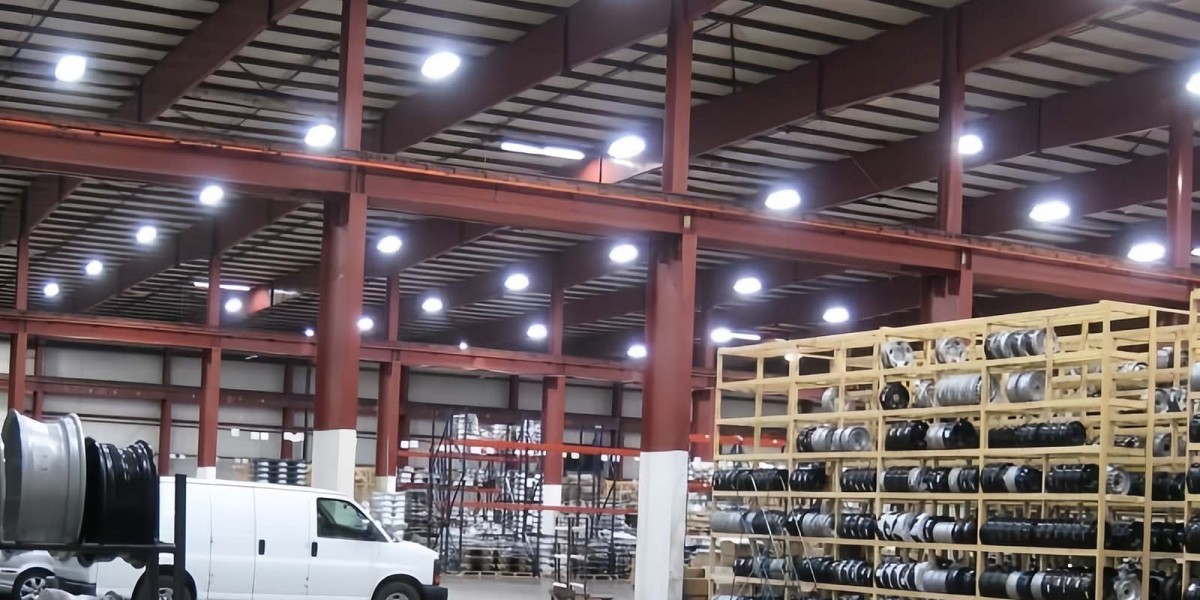

It is important to respond to Industrial Lighting Requirements in Warehouses and Factories. The reason is that good lighting ensures that all the tasks happening on the worksite are carried out in a safe environment. Workers need proper light to work. The worker productivity reduces significantly if the environment is not supportive. Bad lighting is one of the reasons why productivity is reduced on the worksite. The lighting system and the choices can only get better if we analyze the factors that matter deeply. Working in low lights or lights that disturb the eyes can be eye-straining for the workers.
This article is a discussion on the factors that need to be considered when determining lighting requirements for warehouses or factories.
Importance of Proper Industrial Lighting:
In an industrial setting, all sorts of machines are being operated. Workers lift heavy materials and perform complex operations. Can it be done with improper lighting? Workers can probably do some work in the daylight, but still, that is not enough. It is important that we understand the importance of lighting in an industrial setting. Only then can we support a better environment for labor to work in.
Key Benefits of Proper Lighting:
Workers can work in more safe environment
The risk of accidents decreases
Higher productivity
The quality of work is not affected
Energy cost is reduced if good-quality lights are used
Factors That Make a Difference:
Size and Layout of the Facility:
The layout of the facility matters a lot because it is obvious that the bigger the space, the greater the requirement for light. Also, there are different factors that change the type of light needed. You use a different light in the aisles; however, in a space where the roof is very high, the requirement for light can be different.
Why size and layout matter:
Large spaces need more lighting
Long aisles need uniform lighting distribution, so one part does not get too dark.
Machinery and other stuff on the site can create shadows.
Complex layouts need targeted lighting sometimes.
Ceiling Height and Mounting Position:
The ceiling height decides what type of light will be used. Its brightness and the energy it operates on are considered. If the ceilings are high, you can use lights with more brightness. Or another option is to change the place where it is installed. You can use a spot lower than the ceiling.
If one ceiling is high and the other is low, the same light can not be used in both. This is why the same light cannot be used everywhere. If the ceiling is high, it needs high-lumen light; a mid-sized fixture will not work there. LED canopy light 60W is commonly used when moderate illumination is required. It is used in places like loading bays or parking zones.
Nature of Work:
You do not need a very high lumen light at every working spot. Sometimes a small or a medium one also does the job.
Example:
A storage room does not need high-intensity light
Assembly lines need bright light
Quality inspection needs to be done in bright and uniform light. A 100W LED canopy light might be good in this case.
Tasks like packing or sorting can also be done in average bright lights.
Low Energy Operation:
Energy efficiency is a priority when devices that use energy are installed in workspaces. High energy bills can increase the budget of the project. It is important to choose a good company. The reason is that there are several options in the market, but many of them operate on high energy. mostly these lights are the old models. This is why new models should be used because they save energy and reduce the energy cost of the worksite.
Environmental Conditions:
The build quality of the light should be very important specially when it is to be used in an industrial setting. The reason is that the conditions on the website are very harsh. They will be dust and heat, which can damage the light if its quality is not very good.
Many companies sell lights, but not every company focuses on the quality of the light. So one should always do some research on the companies before they make a purchase.
Conclusion:
Industrial lighting is a system that should be taken seriously, just as an electrical system in a building should be. If that system requires proper planning, how can it not need it? Industrial lighting requirements in warehouses and factories should be properly analysed because it is not as simple as it looks. Different spaces have different requirements in terms of the brightness required and the mounting positions. Apart from the requirement in terms of brightness, the safety should also be considered when you buy lights for this setting. The old models of lights are not very safe, so it is high time that we move to the new, safer models.