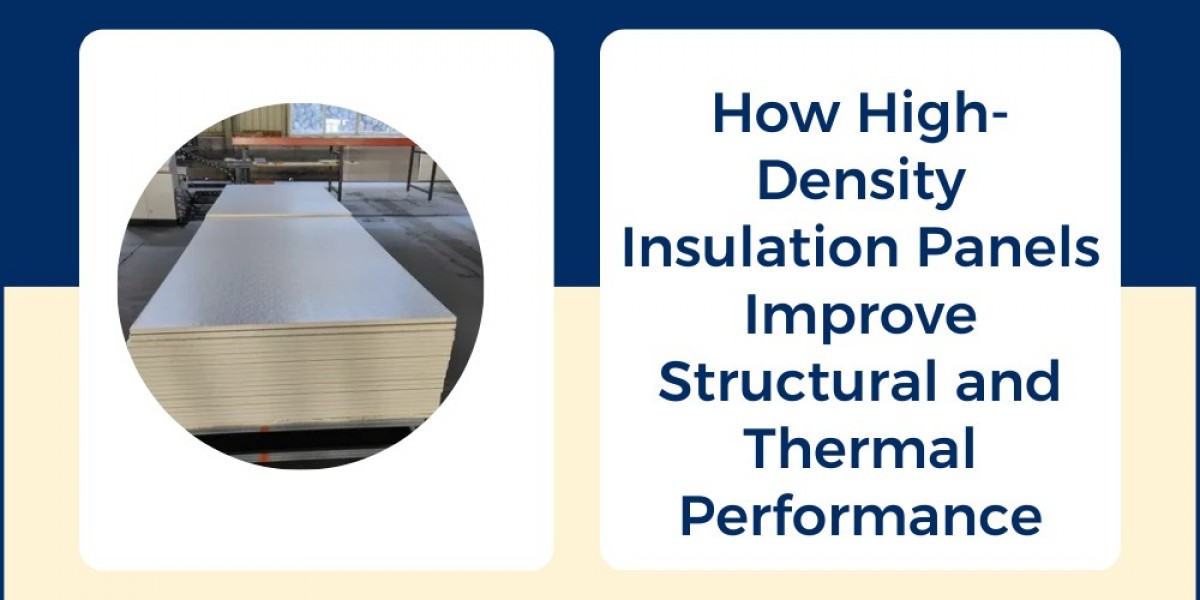

In modern construction, performance-driven materials are no longer optional—they are essential. Buildings today are expected to be energy-efficient, structurally reliable, environmentally responsible, and durable over the long term. Among the materials gaining widespread adoption to meet these expectations are high-density insulation panels. Unlike conventional insulation products, these panels are engineered to deliver both thermal efficiency and structural support, making them a preferred choice in residential, commercial, and industrial projects.
High-density insulation panels are designed with advanced materials and manufacturing techniques that allow them to serve multiple functions within a building envelope. They not only regulate indoor temperatures but also enhance overall structural integrity, moisture resistance, and long-term performance. This article explores how high-density insulation panels improve both structural and thermal performance and why they are becoming a cornerstone of modern construction practices.
Understanding High-Density Insulation Panels
High-density insulation panels are rigid or semi-rigid insulation systems manufactured with materials such as expanded polystyrene, extruded polystyrene, polyisocyanurate, polyurethane foam, mineral wool, or composite polymer-based cores. The defining characteristic of these panels is their higher mass per unit volume than that of standard insulation products. This increased density contributes directly to their superior mechanical strength and thermal resistance.
Unlike loose-fill or low-density batt insulation, high-density panels maintain their shape and performance over time. They are often used in walls, roofs, floors, facades, and prefabricated building systems where consistent insulation and load-bearing capability are required.
The Role of Density in Insulation Performance
Density plays a critical role in determining how insulation behaves under thermal, mechanical, and environmental stress. Higher density generally means improved compressive strength, better resistance to deformation, and enhanced durability. From a thermal standpoint, density influences how effectively heat transfer is slowed within the material.
In high-density insulation panels, the internal cell structure is tightly packed, reducing air movement and limiting conductive and convective heat transfer. This results in stable thermal performance even under fluctuating temperatures and long-term use. The same dense structure also helps the panels resist impact, vibration, and mechanical loads, which is especially important in structural applications.
NOTE:- With its Insulated Board range, IP Harwal Polymer had supported projects requiring strength, safety, and thermal resistance. The solutions delivered consistent quality and compliance with industry norms. Organizations aiming for cost-effective insulation were encouraged to partner with IP Harwal Polymer for trusted results.

Improving Thermal Performance Through Advanced Insulation
One of the primary reasons high-density insulation panels are used is their exceptional thermal performance. They are designed to minimize heat transfer between the interior and exterior of a building, helping maintain comfortable indoor conditions year-round.
High-density panels provide consistent thermal resistance, often measured as R-value, across their entire surface. Because they resist compression and settling, they do not develop gaps or weak points that can lead to thermal bridging. This consistency ensures that heating and cooling systems operate more efficiently, reducing energy consumption and operational costs.
In hot climates, these panels help block external heat from entering the building, while in colder regions, they prevent indoor heat from escaping. This dual functionality makes them suitable for diverse environmental conditions and building types.
Reducing Thermal Bridging in Building Envelopes
Thermal bridging occurs when heat bypasses insulation through structural elements such as studs, beams, or fasteners. Over time, thermal bridging can significantly reduce a building’s energy efficiency and lead to condensation-related issues.
High-density insulation panels help address this problem by providing continuous insulation layers that cover structural components. Their rigidity allows them to span across framing systems without sagging or collapsing, creating an uninterrupted thermal barrier. By reducing thermal bridges, these panels improve overall building performance and enhance indoor comfort.
Enhancing Structural Integrity and Load-Bearing Capacity
Beyond thermal benefits, high-density insulation panels play a vital role in improving structural performance. Their increased compressive and flexural strength allows them to withstand significant loads without deformation. This makes them suitable for applications where insulation must also support finishes, cladding systems, or even structural elements.
In wall assemblies, high-density panels add rigidity and stiffness, helping resist wind loads and impact forces. In roofing systems, they provide a stable base for waterproof membranes and mechanical equipment. When used in floors, they can support distributed loads while maintaining thermal separation between levels.
This combination of insulation and strength reduces the need for additional reinforcement materials, simplifying construction and improving overall system efficiency.
Long-Term Dimensional Stability
Dimensional stability is a critical factor in building materials, as expansion, contraction, or settling can compromise performance over time. High-density insulation panels are engineered to maintain their shape and thickness even under temperature fluctuations and mechanical stress.
Because they resist compression and creep, these panels continue to perform as designed throughout the building’s lifespan. This stability ensures that thermal resistance remains consistent and structural components stay properly aligned, reducing the risk of cracks, gaps, or system failures.
Moisture Resistance and Condensation Control
Moisture intrusion is one of the most common causes of building deterioration. When insulation absorbs moisture, it can lose thermal efficiency, promote mold growth, and weaken surrounding materials.
High-density insulation panels are typically manufactured with closed-cell structures or moisture-resistant fibers that limit water absorption. This resistance helps prevent condensation within wall and roof assemblies, protecting both the insulation and the structural elements around it.
By maintaining a dry, stable environment within the building envelope, these panels contribute to healthier indoor environments and reduce maintenance requirements over time.
Fire Performance and Safety Benefits
Many high-density insulation panels are designed to meet strict fire safety standards. Depending on the material used, they can offer improved fire resistance, reduced flame spread, and lower smoke generation compared to traditional insulation options.
Mineral wool and specially formulated polymer-based panels, for example, can act as fire barriers within wall and roof assemblies. Their density slows the spread of flames and helps maintain structural integrity during fire exposure, providing valuable time for evacuation and emergency response.
Acoustic Performance and Indoor Comfort
In addition to their thermal and structural advantages, high-density insulation panels also provide sound insulation. Their mass and compact structure help absorb and dampen sound waves, reducing noise transmission between rooms or from external sources.
This acoustic benefit is particularly valuable in commercial buildings, residential complexes, and industrial facilities where noise control is a priority. By improving both thermal and acoustic comfort, high-density panels enhance overall occupant satisfaction.

Compatibility With Modern Construction Methods
High-density insulation panels are well-suited to modern construction techniques, including prefabrication and modular building systems. Their uniform dimensions, strength, and ease of installation make them ideal for factory-controlled environments where precision and efficiency are critical.
In on-site construction, these panels can be installed quickly, reducing labor time and minimizing errors. Their durability also makes them easier to handle and transport without damage, contributing to smoother project execution.
Supporting Energy Efficiency and Sustainability Goals
Energy efficiency is a central focus of contemporary building design, and high-density insulation panels play a key role in achieving it. By reducing heat loss and gain, they lower energy demand for heating and cooling, thereby reducing greenhouse gas emissions.
Many high-density panels are manufactured using recyclable materials or processes that minimize environmental impact. Their long service life also means fewer replacements and less waste over time, aligning with sustainable construction principles.
Applications Across Different Building Types
High-density insulation panels are used across a wide range of applications, from residential homes and office buildings to warehouses and industrial plants. In residential construction, they improve comfort and energy efficiency. In commercial settings, they support compliance with building codes and performance standards. In industrial environments, they provide durability, thermal control, and resistance to harsh conditions.
Their versatility allows architects and engineers to integrate them into walls, roofs, floors, facades, and specialized enclosures without compromising design flexibility.
Conclusion
High-density insulation panels represent a significant advancement in building material technology. By combining superior thermal resistance with enhanced structural strength, they address multiple performance requirements within a single system. Their ability to reduce energy consumption, improve durability, control moisture, and support modern construction methods makes them an invaluable component of high-performance buildings.
As the construction industry continues to prioritize efficiency, safety, and sustainability, the role of high-density insulation panels will only grow. Their proven ability to improve both structural and thermal performance positions them as a smart, long-term investment for any project seeking reliable and future-ready solutions.