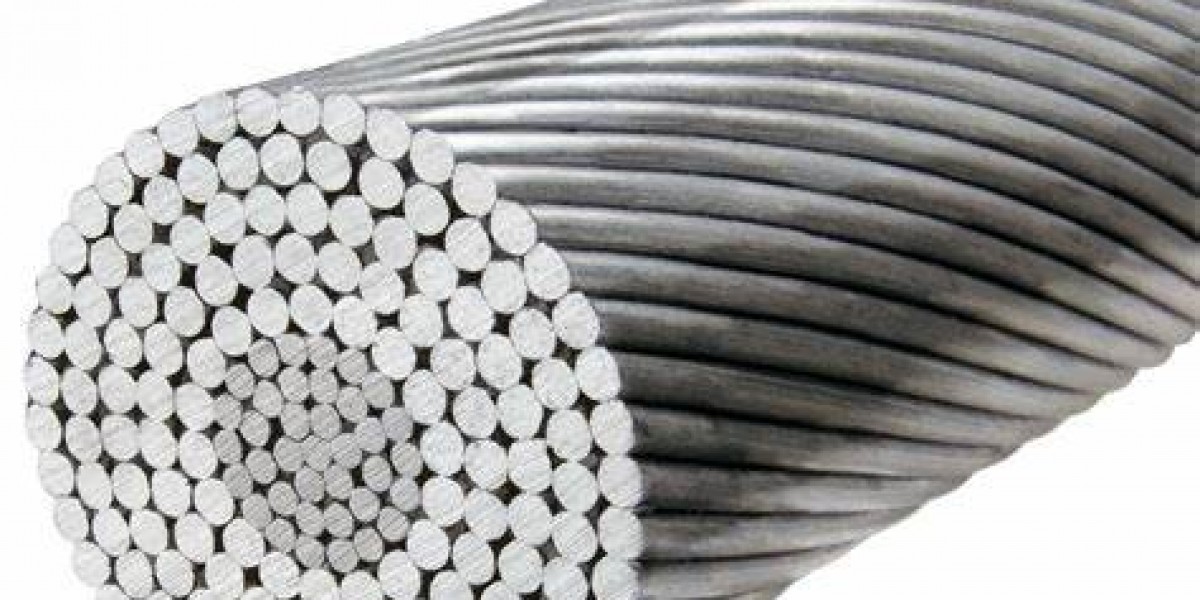

In modern power transmission and distribution networks, ACSR cable plays a critical role in ensuring strength, efficiency, and long-term reliability. Widely used by utilities, EPC contractors, and grid operators worldwide, Aluminum Conductor Steel Reinforced (ACSR) cables are engineered to handle high mechanical loads while delivering dependable electrical performance.
As power demand increases and transmission lines span longer distances, engineers and procurement teams need conductors that balance conductivity, tensile strength, and cost-effectiveness. This is where ACSR cable continues to stand out as an industry-standard solution.
What Is an ACSR Cable?
ACSR cable consists of a central core of galvanized steel wires surrounded by layers of high-purity aluminum strands. This hybrid design combines the best of both materials:
Steel core provides high tensile strength and mechanical stability
Aluminum strands offer excellent electrical conductivity and corrosion resistance
This construction makes ACSR cable ideal for overhead transmission lines that must withstand wind loads, ice accumulation, long spans, and high operating temperatures.
Key Technical Advantages of ACSR Cable
High Tensile Strength for Long Spans
The steel-reinforced core allows ACSR cable to support longer span lengths between towers, reducing the number of structures required and lowering overall project costs.
Proven Electrical Performance
Aluminum strands ensure low electrical resistance, enabling efficient power transfer across medium- and high-voltage transmission networks.
Thermal Stability
ACSR cable maintains mechanical integrity under high operating temperatures, making it suitable for heavily loaded transmission lines.
Cost-Effective Transmission Solution
Compared with all-aluminum conductors, ACSR cable offers a strong balance between performance and affordability, especially for large-scale grid infrastructure projects.
Common Applications of ACSR Cable
ACSR cable is widely deployed across different power transmission environments, including:
High-voltage overhead transmission lines
Extra-high-voltage (EHV) power corridors
Long-distance transmission routes
River crossings and wide-span installations
Areas with high wind or ice load conditions
Utilities prefer ACSR cable for projects where mechanical strength is just as important as electrical efficiency.
ACSR Cable Construction Types
Standard ACSR
Designed for general overhead transmission with a balanced aluminum-to-steel ratio.
High-Strength ACSR
Features a higher steel content for extreme mechanical loading conditions.
Greased or Corrosion-Resistant ACSR
Used in coastal or industrial environments where enhanced corrosion protection is required.
HNBF Power manufactures ACSR cable in various constructions, stranding configurations, and standards to meet project-specific technical requirements.
International Standards and Specifications
ACSR cable is produced in compliance with global standards such as:
ASTM
IEC
BS
DIN
CSA
These standards define conductor size, stranding design, electrical resistance, tensile strength, and testing requirements ensuring consistent quality and performance across global projects.
Why Choose ACSR Cable from HNBF Power?
As a global manufacturer of overhead conductors and power cables, HNBF Power supplies ACSR cable engineered for long service life and demanding grid environments. Our manufacturing capabilities focus on:
High-quality aluminum and steel raw materials
Precision stranding and tension control
Strict electrical and mechanical testing
Custom conductor designs for utility and EPC projects
HNBF Power works closely with engineers and procurement teams to ensure each ACSR cable solution aligns with project voltage levels, span requirements, and environmental conditions.
Installation and Performance Considerations
When selecting ACSR cable, project planners should evaluate:
Span length and tower spacing
Mechanical loading conditions (wind, ice, temperature)
Line voltage and current capacity
Environmental exposure
Proper conductor selection and installation practices directly impact system reliability, sag control, and long-term maintenance costs.
Frequently Asked Questions (FAQs)
1. What does ACSR cable stand for?
ACSR stands for Aluminum Conductor Steel Reinforced, referring to its aluminum strands and steel core construction.
2. Why is ACSR cable used instead of AAC?
ACSR cable offers higher tensile strength than AAC, making it better suited for long spans and high mechanical load conditions.
3. Is ACSR cable suitable for high-voltage transmission?
Yes, ACSR cable is widely used in high-voltage and extra-high-voltage overhead transmission lines.
4. How long does ACSR cable last?
With proper design and installation, ACSR cable can provide reliable service for several decades.
5. Can ACSR cable be customized?
Yes. HNBF Power offers customized ACSR cable designs based on standards, conductor size, and project requirements.
Conclusion
ACSR cable remains one of the most trusted solutions for overhead power transmission worldwide. Its unique combination of strength, efficiency, and durability makes it a preferred choice for utilities and infrastructure developers building resilient power networks.
If you are planning a transmission or distribution project and need a reliable ACSR cable supplier, contact HNBF Power today to discuss customized conductor solutions designed to meet your technical and commercial requirements.