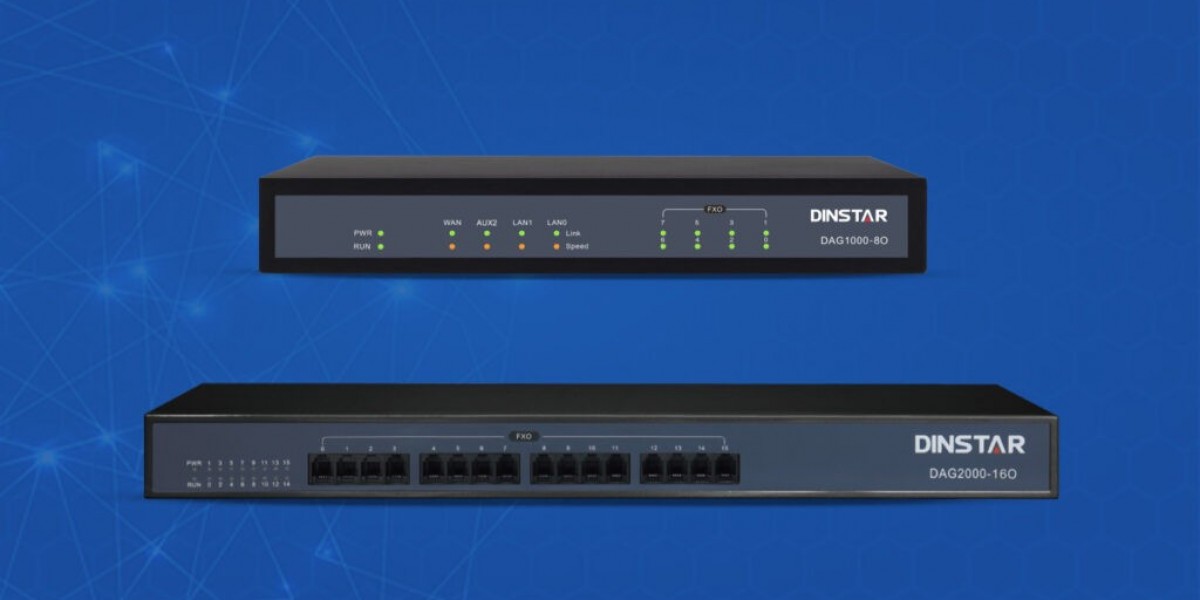

An FXO Gateway plays a vital role in modern business communication by enabling the connection between traditional telephone lines and IP-based communication systems. As organizations gradually shift from legacy telephony to VoIP environments, FXO gateways act as a practical bridge that ensures continuity, cost efficiency, and operational flexibility without replacing existing infrastructure all at once.
What Is an FXO Gateway?
An FXO gateway is a network device designed to interface analog public switched telephone network (PSTN) lines with IP-based systems. It allows businesses to route calls from traditional phone lines into VoIP networks and vice versa. This makes it especially useful for organizations that want to leverage their existing analog lines while adopting modern communication platforms.
In simple terms, it listens to the signals coming from the telephone service provider and converts them into digital signals that IP systems can understand.
How an FXO Gateway Works
The working mechanism of an FXO gateway revolves around signal conversion and call routing. When an incoming call arrives from a traditional telephone line, the gateway converts the analog signal into a digital format and forwards it to the IP-based system. For outgoing calls, the process is reversed—digital signals are converted back into analog form and sent through the PSTN line.
This seamless conversion ensures reliable call handling while maintaining voice quality and call stability.
Key Benefits of Using an FXO Gateway
One of the main advantages of deploying an FXO gateway is cost optimization. Businesses can significantly reduce call expenses by routing calls intelligently between IP networks and traditional lines. It also provides a reliable backup option during internet outages, ensuring uninterrupted communication.
Additionally, FXO gateways support gradual migration. Instead of replacing the entire communication system at once, businesses can transition in phases, reducing risk and upfront investment.
Common Use Cases
FXO gateways are widely used in small and mid-sized businesses, branch offices, and multi-location enterprises. They are ideal for organizations that still rely on analog telephone lines but want to integrate them with modern IP-based solutions. They are also commonly deployed in environments where call redundancy and failover are critical.
FXO Gateway vs Pure IP Communication
While pure IP communication systems rely entirely on internet connectivity, FXO gateways introduce flexibility by maintaining access to traditional telephone networks. This hybrid approach enhances reliability and ensures businesses are not solely dependent on internet availability for voice communication.
Factors to Consider Before Choosing an FXO Gateway
Before selecting an FXO gateway, businesses should evaluate call volume requirements, compatibility with existing systems, scalability needs, and long-term communication goals. A well-chosen gateway ensures smooth integration, reliable performance, and future-ready communication infrastructure.
Conclusion
An FXO gateway remains a valuable component in today’s evolving communication landscape. By enabling seamless interaction between traditional telephone lines and IP networks, it helps businesses modernize their communication systems without disruption. For organizations seeking flexibility, reliability, and a smooth transition to IP-based communication, the FXO Gateway offers a practical and efficient solution.