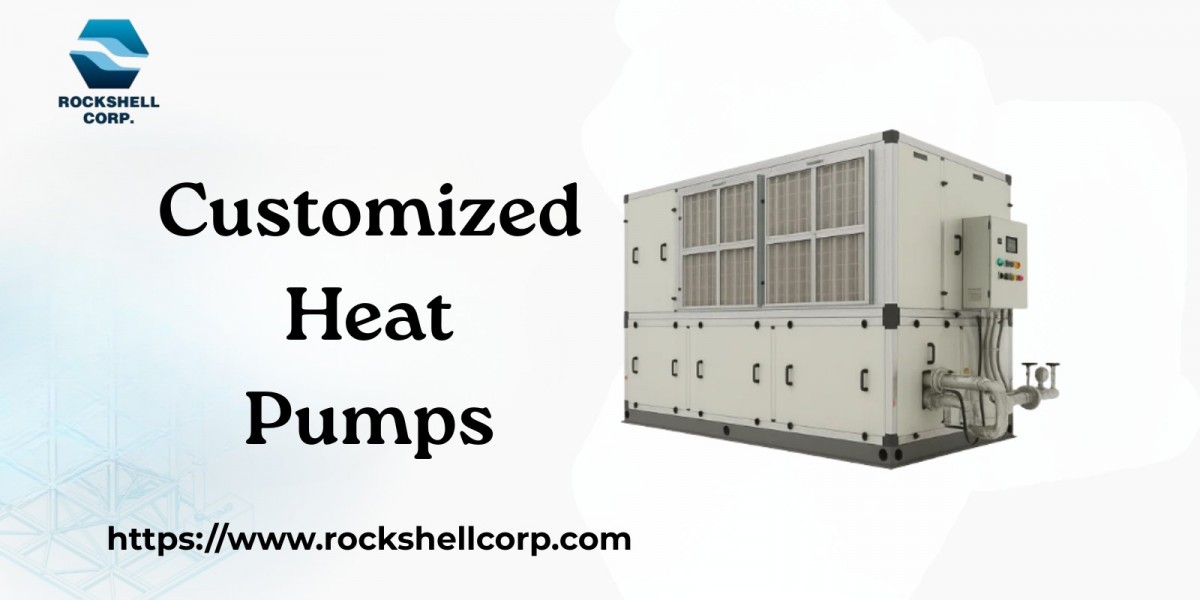

In modern industrial heating applications, customized heat pumps are becoming an increasingly preferred choice for sustainable thermal energy generation. A customized heat pump manufacturer not only engineers advanced heating solutions but also integrates personalized control systems to ensure operational precision, efficiency, and safety. Unlike standard heating units that provide a one-size-fits-all approach, customized heat pumps equipped with smart control mechanisms deliver tailored performance suited to specific industrial conditions, production goals, and energy requirements.
Understanding Personalized Control Systems in Customized Heat Pumps
Personalized control systems act as the intelligence layer within customized heat pumps. These systems manage, regulate, and optimize various heat pump functions including temperature levels, system load, heat recovery cycles, energy utilization, and operational timing. What makes these control systems “personalized” is their ability to adapt to unique process demands whether it's a manufacturing plant requiring steady hot water, a chemical facility needing precise temperature regulation, or a food processing unit demanding hygienic and consistent heating.
Traditional heating systems are heavily dependent on manual regulation, which not only increases labor costs but also contributes to inefficiencies and heat loss. In contrast, customized heat pumps with personalized control systems operate autonomously, using sensors, programmable logic, and intelligent automation to ensure consistent performance with minimal manual intervention.
Enhancing Operational Efficiency and Energy Savings
One of the core benefits of personalized control systems is optimizing energy usage. Industrial facilities often operate around fluctuating demands certain hours require peak heating, while other periods need reduced load. Personalized controls automatically scale system capacity based on real-time demand. Instead of running at full power continuously, the heat pump modulates output to minimize energy waste.
This approach not only improves efficiency but also lowers operational cost. When integrated with digital monitoring tools, the system can analyze energy consumption patterns and recommend process improvements, leading to measurable long-term savings. For industries focusing on sustainability, this improved efficiency also supports environmental targets by reducing fuel dependency and emissions.
Improving Process Stability and Thermal Accuracy
Every industrial application has unique thermal parameters. For example, a pharmaceutical unit may require precise hot water temperatures for formulations, while a textile manufacturer may need exact thermal regulation for dyeing or finishing operations. Personalized control systems ensure these specific temperature requirements are consistently met.
Advanced controllers use multiple feedback sensors that continuously monitor temperature and modify system output in real time. This level of precision ensures uniform heat distribution, reduces the risk of overheating or underheating, and enhances overall product quality. When combined with predictive settings, the system can anticipate production changes and adjust accordingly, which is especially valuable in high-volume processing environments.
Remote Monitoring and Predictive Maintenance
Modern personalized control systems are not only programmable but also remotely accessible. Operators can monitor system health, performance, and energy status through digital dashboards. Whether the unit is installed in a refinery, processing plant, or energy-intensive industrial facility, engineers can adjust settings, schedule cycles, and track efficiency from any location.
Predictive maintenance is another major advantage. Instead of waiting for a breakdown, control systems identify potential issues based on performance deviations, compressor behavior, temperature inconsistencies, or load imbalances. Early alerts allow maintenance teams to intervene proactively, preventing costly downtime and unexpected shutdowns. This feature is especially useful for industries where uninterrupted thermal supply is crucial to production continuity.
Supporting Flexibility and Custom Scalability
Customized heat pump solutions are often deployed across diverse industrial applications—including chemicals, food processing, pharmaceuticals, mining, and textiles. Personalized control systems give these heat pumps the flexibility to serve multiple roles. For example, a single system may need to support heating, cooling, or waste heat recovery with varying demand levels across different departments.
Because the control systems are tailored, they can adapt operational behavior based on production schedules, raw material conditions, ambient temperature variations, or machinery load. This adaptability not only ensures better scalability but also helps businesses maximize ROI on their customized heat pump investment.
Integrating With Smart Factory and Automation Systems
As industries move toward digitization and smart factory operations, personalized control systems allow customized heat pumps to integrate with SCADA systems, building management systems (BMS), and IoT platforms. This means the heat pump becomes part of a larger automated ecosystem that synchronizes with manufacturing processes, thermal cycles, and safety controls.
Such integration enhances decision-making and operational clarity. Managers can track performance analytics, process trends, and consumption data in real time. The availability of actionable insights supports optimization strategies, predictive planning, and cost control across the entire production ecosystem.
Conclusion
Personalized control systems are central to the performance, safety, and reliability of customized heat pumps. They enable smart automation, precision heating, energy optimization, and seamless integration with industrial processes. Instead of functioning as a standalone unit, the customized heat pump becomes an intelligent, automated heating solution designed around unique industrial requirements.
With growing demand for sustainable and efficient heating systems, industries benefit greatly when they choose a customized heat pump manufacturer capable of engineering advanced control systems that elevate product quality and operational efficiency.