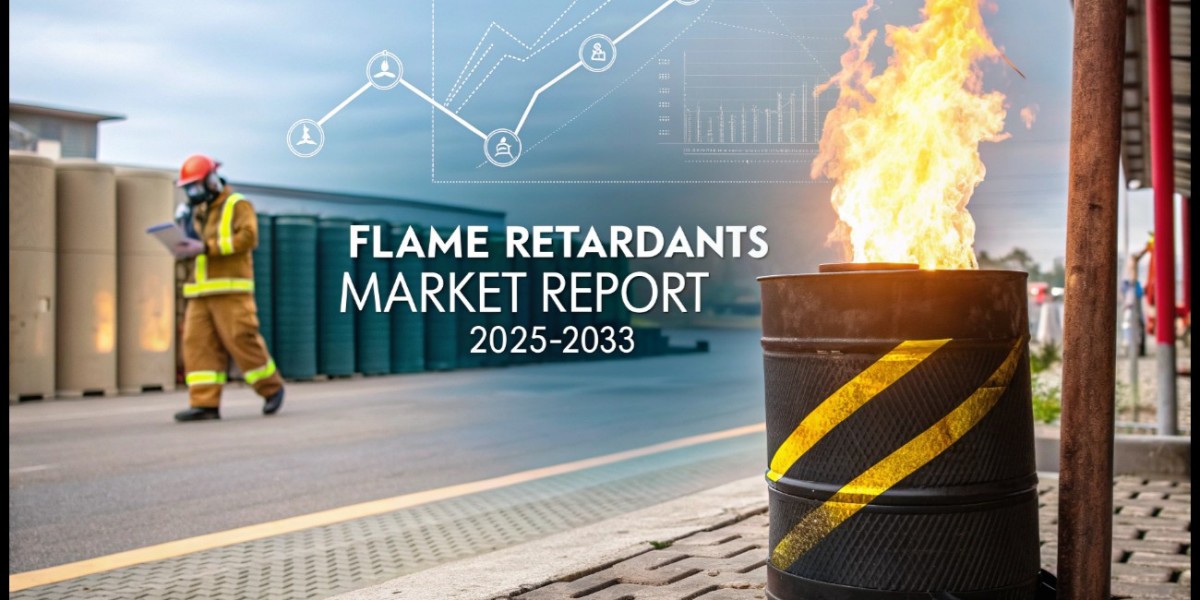

The global flame retardants market was valued at USD 10.38 Billion in 2024 and is projected to reach USD 16.96 Billion by 2033, growing at a CAGR of 5.56% during the forecast period 2025-2033. Asia-Pacific leads the market with a 57.6% share in 2024, driven by rapid urbanization, infrastructure development, and significant electronic manufacturing activities. Growth is further supported by stringent fire safety regulations across key industries like aerospace, automotive, and construction.
Study Assumption Years
- Base Year: 2024
- Historical Year/Period: 2019-2024
- Forecast Year/Period: 2025-2033
Flame Retardants Market Key Takeaways
- Current Market Size: USD 10.38 Billion (2024)
- CAGR: 5.56% (2025-2033)
- Forecast Period: 2025-2033
- Asia-Pacific dominated the market with more than 57.6% share in 2024.
- Rising fire safety regulations and standards across sectors including construction, electronics, and automotive are key growth drivers.
- The electrical and electronics segment leads by end-use industry with approximately 38.1% share in 2024.
- Brominated flame retardants hold the largest market segment by type due to their effectiveness and adaptability.
- Epoxy resins represent the leading application segment with about 26.8% market share in 2024.
Sample Request Link:
https://www.imarcgroup.com/flame-retardants-market/requestsample
Market Growth Factors
The flame retardants market growth is significantly propelled by increasing fire safety regulations across various industries. Companies are compelled to comply with stringent safety standards, particularly in construction, electronics, and automotive sectors. For example, in June 2024, Evonik introduced TEGO Therm coatings designed to improve electric vehicle battery safety by preventing thermal runaway and adhering to UL 94 V-0 standards. Elevated demand for fire-resistant materials in both residential and commercial buildings further drives the market positive outlook.
Another important growth factor is the expanding use of flame retardants in automotive and electronic applications. The automobile industry employs these materials in dashboards, seats, and wiring harnesses to mitigate fire risks during accidents. Data from the NFPA indicates an average of 119,681 vehicle fires annually between 2018 and 2022, contributing to significant fatalities, injuries, and property damage. Similarly, increasing consumer electronics reliance on flame retardants to prevent electrical fires accelerates market demand. Regulatory enforcements worldwide increase adoption rates to protect people and property.
Technological advancements also contribute to market expansion. A rising focus on eco-friendly and less toxic flame retardants, including bio-based variants from renewable sources, widens consumer acceptance. The adoption of nanoscale flame retardants reduces chemical usage while improving environmental health. Innovations such as biomaterials for PFAS-free foams and halogen-free cables, mentioned in recent company developments, underscore the trend towards sustainable fire safety materials. This continual evolution addresses regulatory demands and consumer preferences while maintaining product effectiveness.
Market Segmentation
By Type:
- Alumina Trihydrate: A flame retardant used to enhance fire resistance by releasing water when heated, aiding in fire suppression.
- Brominated Flame Retardants: The largest segment, effective in preventing fires and slowing their spread; compatible with plastics, foams, textiles, and coatings.
- Antimony Trioxide: Utilized as a synergist to enhance the efficiency of other flame retardants.
- Phosphorus Flame Retardants: Environmentally friendlier alternatives often used to meet regulatory standards.
- Others: Additional types catering to specific industry needs.
By Application:
- Unsaturated Polyester Resins: Used for fire resistance in composite materials.
- Epoxy Resins: Leading application segment with 26.8% market share; they form protective char layers when exposed to fire and possess low environmental impact.
- PVC: Commonly used in wire and cable insulation requiring flame resistance.
- Rubber: Flame retardants improve fire safety and durability in rubber products.
- Polyolefins: Widely used plastics requiring enhanced flame retardancy.
- Others: Various other applications across industries.
By End Use Industry:
- Construction: Uses flame retardants in building materials to meet fire safety norms.
- Wires and Cables: Flame retardant coatings protect electrical infrastructure.
- Automotive and Transportation: Flame retardants improve passenger safety by reducing fire risks.
- Electrical and Electronics: Largest end-use segment at 38.1%; flame retardants prevent device fires and protect components.
- Others: Includes various miscellaneous industries requiring fire safety solutions.
Regional Insights
Asia-Pacific dominates the global flame retardants market with a 57.6% share in 2024 due to rapid urbanization, expanding infrastructure development, and concentrated electronic manufacturing hubs. The construction sector's demand for fire-resistant materials to comply with safety standards further propels growth. Availability of key raw materials and increasing fire incidents in the region catalyze rising flame retardant adoption.
Recent Developments & News
- December 2024: ICL launched VeriQuel R100, a phosphorus-based flame retardant for rigid polyurethane insulation, with adoption by four U.S. roofing companies.
- November 2024: Clariant introduced Exolit AP 422 A, a melamine-free flame retardant offering high fire resistance and regulatory compliance.
- September 2024: Asahi Kasei unveiled LASTAN™, a flexible flame-retardant nonwoven fabric enhancing EV battery safety.
- April 2024: Finolex Cables launched FinoGreen, an eco-safe, halogen-free flame-retardant cable range designed for industrial use.
- June 2023: Birla Cellulose (Grasim Industries) introduced Birla SaFR, a sustainable flame-retardant fibre for technical textiles.
Key Players
- Almatis GmbH
- BASF SE
- Borealis GmbH (OMV Aktiengesellschaft)
- Budenheim Iberica S.L.U
- Campine NV
- Clariant AG
- Dover Chemical Corporation (ICC Industries Inc.)
- Dow Inc.
- ICL Group Ltd
- Lanxess AG
- Otsuka Chemical Co. Ltd.
- RTP Company (Miller Waste Mills Inc.)
Get Custom Market Research Report for Your Business:
https://www.imarcgroup.com/request?type=report&id=4382&flag=E
If you require any specific information that is not covered currently within the scope of the report, we will provide the same as a part of the customization.
About Us
IMARC Group is a global management consulting firm that helps the world’s most ambitious changemakers to create a lasting impact. The company provide a comprehensive suite of market entry and expansion services. IMARC offerings include thorough market assessment, feasibility studies, company incorporation assistance, factory setup support, regulatory approvals and licensing navigation, branding, marketing and sales strategies, competitive landscape and benchmarking analyses, pricing and cost research, and procurement research.
Contact Us
IMARC Group,
134 N 4th St. Brooklyn, NY 11249, USA,
Email: sales@imarcgroup.com,
Tel No: (D) +91 120 433 0800,
United States: +1-201971-6302