
Market Overview
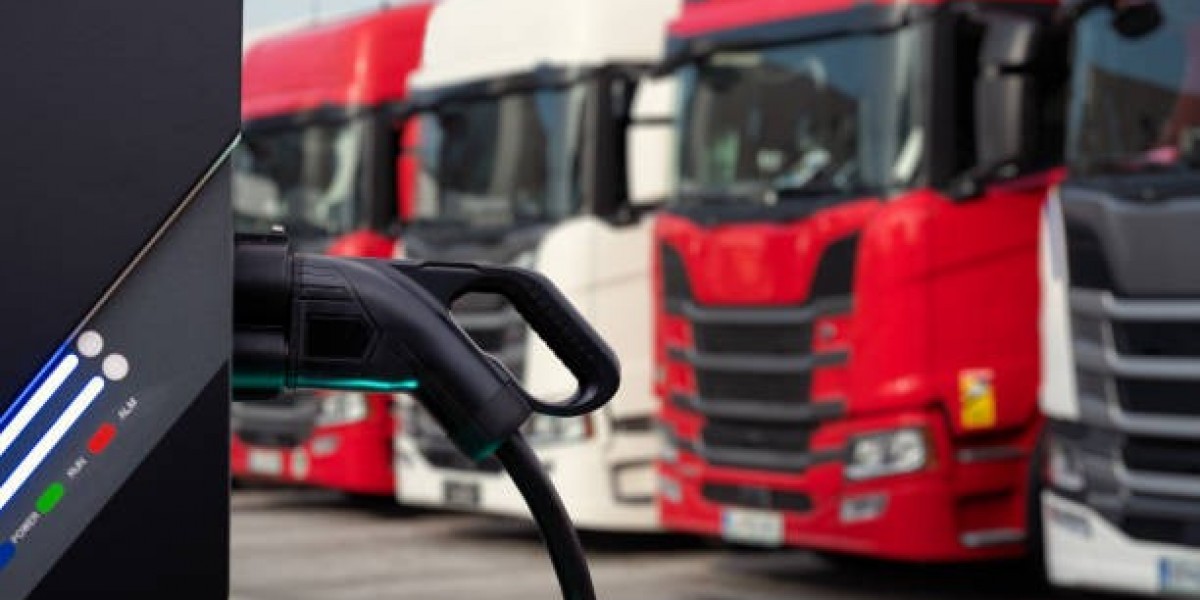
The Germany electric truck market size reached USD 38.36 Million in 2024 and is forecasted to grow to USD 359.57 Million by 2033, registering a CAGR of 25.08% during the forecast period 2025-2033. This growth is driven by initiatives such as autobahn electrification projects and government procurement incentives that promote zero-emission freight corridors. The co-located manufacturing ecosystem of domestic truck makers and gigafactories supports rapid rollout and cost efficiencies, while green logistics zones in major cities provide operational advantages.
Study Assumption Years
- Base Year: 2024
- Historical Year/Period: 2019-2024
- Forecast Year/Period: 2025-2033
Germany Electric Truck Market Key Takeaways
- The market size was USD 38.36 Million in 2024.
- The CAGR for the forecast period 2025-2033 is 25.08%.
- The forecast period covered is 2025-2033.
- Germany's autobahn electrification initiative enables hybrid and electric trucks to charge while driving, expanding zero-emission freight transport.
- National and local subsidies promote procurement of electric heavy vehicles and support private charging infrastructure.
- Volvo holds 47% of the electric heavy truck segment in Europe by the end of 2024, with over 1,970 new electric Volvos registered Europe-wide.
- Domestic manufacturers, including Daimler Truck, MAN, and Volkswagen’s Traton Group, are advancing battery-electric and hydrogen fuel-cell trucks production.
Sample Request Link: https://www.imarcgroup.com/germany-electric-truck-market/requestsample
Market Growth Factors
Germany’s electric truck market is propelled by the federal ministry’s "eHighway" initiative featuring overhead power lines along autobahn freight corridors. This enables electric and hybrid trucks to charge on-the-go, transforming long-distance freight transport into a zero-emission solution. This concept is expanding beyond pilot regions like Hesse, Baden-Württemberg, and Schleswig-Holstein, driving the electrification of heavy freight corridors in Germany.
Government procurement programs at both national and regional levels significantly bolster market growth. Berlin offers grants to municipal and public-sector logistics fleets that offset the cost differential between diesel and electric heavy vehicles. Additional subsidies and expedited permitting from various Länder for private charging hubs further encourage electric truck adoption across distribution centers.
The development of a high-tech manufacturing ecosystem underpins market expansion. Established German truck makers such as Daimler Truck, MAN, and Volkswagen's Traton Group leverage domestic engineering capabilities to mass-produce battery-electric and hydrogen fuel-cell trucks. The presence of new gigafactories for heavy-duty battery packs decreases reliance on imported cells and shortens supply chains, enabling faster delivery and cost reduction. This combined manufacturing and supply chain ecosystem positions Germany as a leading launchpad for zero-emission heavy-duty vehicles throughout Europe.
Market Segmentation
- Vehicle Type Insights: The market segmentation includes light-duty trucks, medium-duty trucks, and heavy-duty trucks, covering a wide range of vehicle categories for diverse freight and logistics needs.
- Propulsion Insights: Segmentations are by battery electric truck, hybrid electric truck, plug-in hybrid electric truck, and fuel cell electric truck, reflecting the variety of powertrain technologies deployed.
- Range Insights: The market includes electric trucks with ranges segmented as 0-150 miles, 151-300 miles, and above 300 miles, addressing different operational requirements.
- Application Insights: The demand sectors cover logistics, municipal use, construction, mining, and others, showcasing electric trucks' versatile applications across industries.
Regional Insights
Germany's electric truck market is comprehensively analyzed across Western Germany, Southern Germany, Eastern Germany, and Northern Germany regions. The report provides in-depth assessment but does not specify a single dominant region or regional market share data.
Recent Developments & News
In June 2025, MAN commenced mass production of its eTruck models (eTGX, eTGS, eTGL) at its Munich facility after investing approximately 200 million in R&D. The plant produces diesel and electric trucks on the same line, aiming to deliver the first 1,000 eTrucks by year-end, with ranges up to 740 km optimized for European logistics.
Additionally, in June 2025, Daimler Truck partnered with DHL and hylane to deploy 30 Mercedes-Benz eActros 600 long-haul electric trucks in Germany. DHL will integrate these trucks into its Post & Parcel Germany division by mid-2026 under a "pay per use" leasing model, marking Germany's largest electric truck contract in 2025 and supporting DHL's net-zero logistics initiatives.
Key Players
- Daimler Truck
- MAN
- Volkswagen's Traton Group
- Mercedes-Benz Trucks
- Volvo
- DHL
- hylane
If you require any specific information that is not covered currently within the scope of the report, we will provide the same as a part of the customization.
About Us
IMARC Group is a global management consulting firm that helps the world’s most ambitious changemakers to create a lasting impact. The company provide a comprehensive suite of market entry and expansion services. IMARC offerings include thorough market assessment, feasibility studies, company incorporation assistance, factory setup support, regulatory approvals and licensing navigation, branding, marketing and sales strategies, competitive landscape and benchmarking analyses, pricing and cost research, and procurement research.