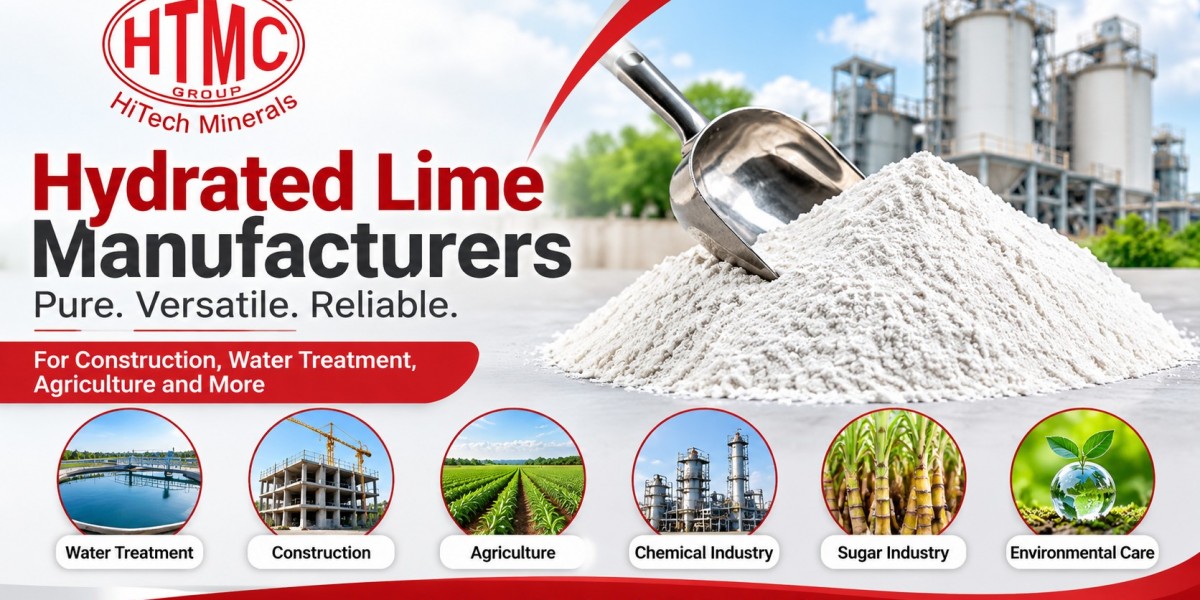

Hydrated lime is an essential industrial mineral widely used in construction, water treatment, agriculture, chemical manufacturing, and several other industries. Also known as calcium hydroxide (Ca(OH)₂), it is a fine white powder produced by adding water to quicklime. Due to its alkaline properties, versatility, and ability to neutralize acidic substances, it plays an important role in numerous industrial and commercial processes.
India has a growing demand for industrial minerals because of continuous development in infrastructure, manufacturing, agriculture, and environmental management. As industries expand, the need for consistent and high-quality hydrated lime is also increasing. Businesses therefore look for reliable Hydrated Lime Suppliers in India who can provide suitable products according to their technical and operational requirements.
Selecting the right supplier is not only about purchasing a material at a competitive price. Product purity, particle size, packaging, quality control, and timely delivery are equally important. Understanding these factors helps industrial buyers make better purchasing decisions and maintain smooth production operations.
What Is Hydrated Lime?
Hydrated lime is a chemical compound with the formula Ca(OH)₂. It is commonly available as a soft, white, fine powder and is also known as slaked lime or calcium hydroxide.
It is manufactured through a chemical reaction between quicklime (calcium oxide) and water. During this process, quicklime absorbs water and forms hydrated lime, releasing heat.
The chemical reaction is:
CaO + H₂O → Ca(OH)₂ + Heat
The resulting material has strong alkaline properties, making it useful for neutralizing acids, adjusting pH levels, and supporting different chemical and industrial processes.
Depending on its quality and specifications, hydrated lime can be used in several applications, including wastewater treatment, construction materials, soil improvement, and chemical manufacturing.
How Is Hydrated Lime Manufactured?
The manufacturing process involves multiple stages to ensure that the final product meets the required quality standards.
1. Selection of Raw Materials
The process starts with selecting good-quality limestone containing a suitable percentage of calcium carbonate. The quality of limestone directly affects the chemical composition of the final product.
2. Calcination of Limestone
The selected limestone is heated at high temperatures inside a kiln. This process, known as calcination, converts calcium carbonate into calcium oxide and releases carbon dioxide.
CaCO₃ → CaO + CO₂
The calcium oxide obtained is commonly called quicklime.
3. Hydration Process
Quicklime is mixed with a controlled quantity of water to produce calcium hydroxide. Proper control of temperature and water quantity is important to achieve the desired product quality.
4. Grinding and Screening
After hydration, the material is processed to achieve the required fineness and particle size. Screening helps remove larger particles and improves product uniformity.
5. Quality Testing and Packaging
The finished material undergoes quality checks for chemical composition, moisture content, fineness, and other relevant parameters. Once approved, it is packed in suitable bags to protect it from moisture and contamination during transportation and storage.
Major Industrial Applications of Hydrated Lime
Hydrated lime is used across different industries because of its chemical properties and versatility. Some of its major applications are discussed below.
1. Water and Wastewater Treatment
Water treatment is one of the most important applications of hydrated lime. Municipal water treatment plants and industrial facilities use it to regulate pH levels and improve water quality.
It helps neutralize acidic water and supports the removal of certain dissolved impurities. It can also assist in reducing water hardness and improving wastewater treatment processes.
Industries dealing with chemical wastewater use this material to maintain suitable pH conditions during treatment. Its effectiveness depends on correct dosage, water composition, and treatment requirements.
2. Construction Industry
Hydrated lime is widely used in construction materials such as mortar, plaster, and selected cement-based products.
When mixed with other building materials, it can improve workability, plasticity, and water retention. These properties make construction mixtures easier to handle and apply.
It is also useful in certain restoration projects where traditional lime-based building materials are required.
3. Agriculture and Soil Improvement
Agriculture is another important sector where hydrated lime finds practical applications. It is used to manage acidic soil conditions and improve soil pH when required.
Highly acidic soil can affect nutrient availability and restrict plant growth. Applying lime according to soil test recommendations can help create a more suitable environment for agricultural production.
Hydrated lime also provides calcium, which is an essential element for healthy soil and plant development. However, the quantity and method of application should be determined according to soil conditions and professional agricultural advice.
4. Chemical Manufacturing
Hydrated lime is an important raw material in various chemical processing operations. Its alkaline nature makes it suitable for neutralization reactions and the production of different calcium-based compounds.
It is used in selected chemical formulations, industrial processing activities, and manufacturing operations that require calcium hydroxide.
For these applications, consistent chemical composition and product purity are important to maintain reliable processing results.
5. Sugar Processing Industry
Sugar manufacturing facilities use hydrated lime during the clarification of sugarcane juice.
It helps regulate the pH of the juice and supports the removal of unwanted impurities during clarification. This improves the conditions for subsequent purification and sugar crystallization processes.
The quality and quantity of lime used are important because they can influence processing efficiency and the quality of the finished product.
6. Environmental Protection
Hydrated lime also plays a role in environmental management, particularly in industrial emission treatment.
It can react with acidic gases such as sulphur dioxide and hydrogen chloride, helping reduce their concentration in industrial exhaust streams.
This application is relevant to industries such as cement manufacturing, power generation, and waste processing, where emission control is an important operational requirement.
Benefits of Using High-Quality Hydrated Lime
Choosing quality material can make a significant difference in industrial performance. Some important benefits include:
Effective pH Control: Its alkaline properties make it suitable for neutralizing acidic substances and maintaining the required pH levels.
Versatile Applications: It can be used across construction, agriculture, water treatment, and chemical industries.
Improved Processing: Suitable grades support consistent performance in different industrial operations.
Calcium Supply: It provides calcium for selected agricultural and manufacturing applications.
Environmental Applications: It supports certain wastewater treatment and industrial emission control processes.
Easy Handling: Fine powdered material can be incorporated into suitable industrial processes using appropriate handling equipment.
The actual benefits depend on product specifications, application methods, and operating conditions.
Important Quality Parameters to Check Before Buying
Before selecting a supplier, industrial buyers should understand the technical properties that influence product performance.
Calcium Hydroxide Content
The available calcium hydroxide percentage is an important quality parameter. Different industries may require different purity levels depending on their applications.
Particle Size and Fineness
Particle size affects mixing, dispersion, and reaction performance. Uniform fineness is particularly important in applications requiring consistent material distribution.
Moisture Content
Excessive moisture can affect the flowability, storage stability, and handling characteristics of the powder. Proper packaging and storage help maintain product quality.
Chemical Composition
Buyers should check the presence of impurities and other chemical constituents according to the requirements of their industrial processes.
Packaging and Storage
Hydrated lime should be stored in dry conditions and protected from moisture and contamination. Suitable packaging helps preserve its quality during transportation and storage.
How to Choose Reliable Hydrated Lime Suppliers in India
Finding a suitable supplier is an important step for businesses that depend on industrial minerals. A reliable sourcing partner can help maintain product consistency and reduce supply-related difficulties.
Here are some important factors to consider:
1. Product Quality and Specifications
Always review the product's technical specifications before purchasing. Check its purity, chemical composition, moisture content, and particle size.
2. Quality Control Procedures
Choose suppliers who follow regular product inspection and testing procedures. Request relevant quality documents and technical data sheets whenever necessary.
3. Supply Capacity
Make sure the supplier can fulfil your required order quantities and support your regular material requirements.
4. Packaging Standards
Proper packaging is necessary to protect powdered materials from moisture and contamination. Check whether the supplier offers suitable packaging for transportation and storage.
5. Industry Experience
Consider suppliers with experience in serving industrial customers and understanding different application requirements.
6. Customer Support
Good communication makes it easier to discuss specifications, order quantities, delivery schedules, and other purchasing requirements.
7. Competitive Pricing
Compare prices from different suppliers, but do not make purchasing decisions based only on the lowest quotation. Product quality and supply reliability should also be considered.
HTMC Group: Supporting Industrial Mineral Requirements
HTMC Group is associated with industrial minerals and chemical product requirements for different business sectors. The company focuses on serving industries that depend on suitable mineral and chemical materials for their manufacturing and processing operations.
When exploring hydrated lime procurement, businesses should first identify their application requirements, desired product specifications, and expected order quantities.
A clear understanding of these factors helps buyers select the appropriate material and establish a more effective sourcing process.
For businesses researching Hydrated Lime Suppliers in India, evaluating product specifications, quality consistency, and supply capabilities is an important part of finding a suitable business partner.
HTMC Group provides an option for businesses exploring industrial mineral solutions and looking for information related to their material requirements.
Growing Demand for Hydrated Lime in India
The demand for hydrated lime is closely connected to the development of India's industrial and infrastructure sectors. Growing construction activities, increasing wastewater treatment requirements, and expanding manufacturing operations continue to support the use of calcium-based materials.
Environmental management is another important factor influencing demand. Industries are focusing on wastewater treatment and emission control to meet applicable environmental requirements.
Agricultural applications also contribute to the importance of lime products, particularly in areas where soil acidity needs to be managed.
As industrial requirements continue to evolve, businesses will increasingly focus on product quality, consistent supply, and dependable sourcing relationships.
Conclusion
Hydrated lime is a versatile industrial material that supports several important applications, including water treatment, construction, agriculture, chemical manufacturing, sugar processing, and environmental management. Its alkaline properties and chemical characteristics make it valuable for different industrial operations.
Selecting the right supplier requires attention to product purity, particle size, moisture content, packaging, quality testing, and supply capacity. Businesses should always evaluate their technical requirements before choosing a suitable grade.
When comparing Hydrated Lime Suppliers in India, buyers should focus on long-term product consistency and reliable service rather than price alone. HTMC Group is an option for businesses exploring industrial mineral requirements and suitable product solutions. Making informed purchasing decisions can help industries improve operational efficiency and maintain consistent production standards.