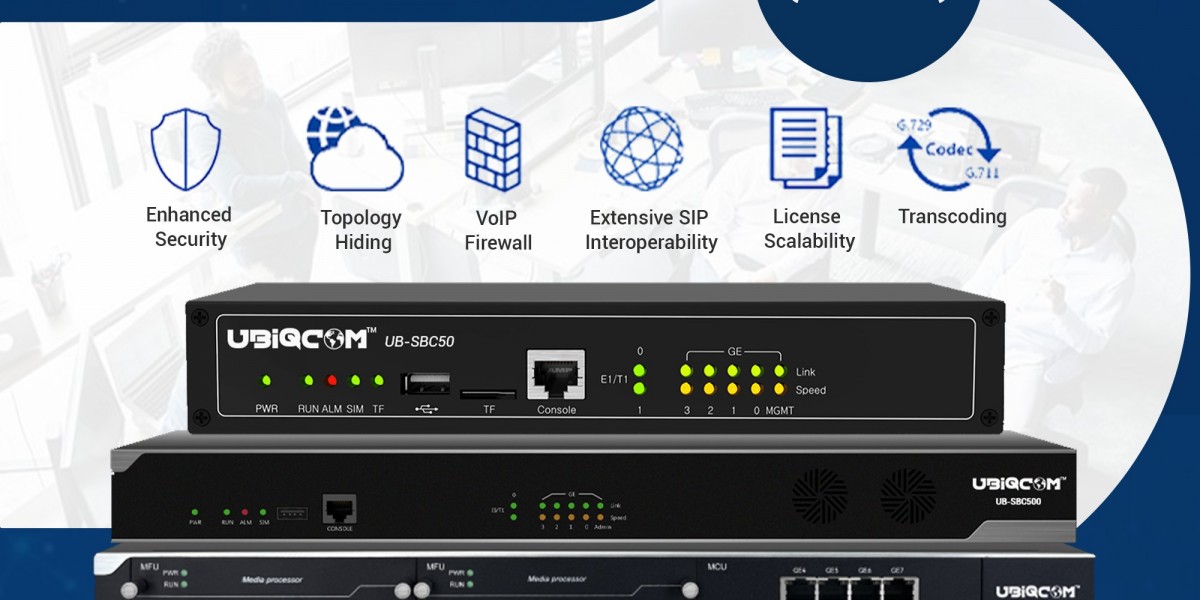

Voice over IP has become the standard for business communication, but as IP-based calling grows, so do security risks, interoperability challenges, and quality issues. This is where SBC VoIP plays a critical role. Acting as a control point between different VoIP networks, an SBC ensures that voice traffic remains secure, stable, and high in quality, even in complex and high-volume environments.
What Is SBC VoIP?
An SBC, or Session Border Controller, is a network element placed at the edge of a VoIP network. Its main function is to manage and protect SIP-based voice sessions as they pass between internal systems and external service providers. In simple terms, it acts as a gatekeeper that controls how calls are set up, maintained, and terminated across IP networks.
Unlike basic firewalls, an SBC understands VoIP signaling and media flows, allowing it to handle voice-specific requirements such as call routing, codec negotiation, and NAT traversal.
Why SBC VoIP Is Essential
As businesses rely more on cloud PBX, SIP trunking, and unified communications, voice traffic increasingly travels over public and private IP networks. This exposure introduces risks such as call fraud, denial-of-service attacks, and interoperability failures between vendors. SBC VoIP addresses these issues by providing a dedicated layer of control that is purpose-built for real-time communication.
It also ensures consistent call quality by managing bandwidth, preventing jitter, and handling packet loss more intelligently than generic network devices.
Key Functions of SBC VoIP
Security and Threat Protection
One of the most important roles of an SBC is protecting VoIP infrastructure from external threats. It hides internal network topology, blocks unauthorized access, and filters malformed or suspicious SIP messages. This significantly reduces the risk of toll fraud and service disruption.
Interoperability Management
Different VoIP platforms and service providers often interpret SIP standards slightly differently. An SBC normalizes signaling and media, allowing systems from multiple vendors to work together seamlessly. This is especially valuable for enterprises and service providers operating multi-vendor environments.
Quality of Service Control
Voice quality is sensitive to delay, jitter, and packet loss. An SBC monitors call sessions in real time and applies policies to prioritize voice traffic, manage codecs, and enforce call admission control. This ensures stable performance even during peak network usage.
NAT and Firewall Traversal
VoIP traffic often struggles to pass through NAT devices and firewalls. SBCs are designed to handle these scenarios by maintaining session awareness and correctly routing signaling and media streams, ensuring reliable call connectivity.
SBC VoIP in Enterprise and Service Provider Networks
In enterprise environments, SBCs are commonly deployed to secure IP PBX systems, connect to SIP trunk providers, and support remote or branch-office users. They allow IT teams to enforce security policies while maintaining flexibility and scalability.
For service providers, SBC VoIP is even more critical. It enables large-scale traffic handling, protects core networks, and ensures service-level agreements are met. SBCs also support advanced features such as number masking, call routing policies, and lawful interception where required.
Deployment Models
SBCs can be deployed as hardware appliances, virtual machines, or cloud-native solutions. Hardware-based SBCs are often preferred for high-capacity environments, while virtual and cloud SBCs offer flexibility and faster deployment for modern, distributed networks. The choice depends on call volume, redundancy requirements, and overall network architecture.
Conclusion
As VoIP continues to replace traditional telephony, the role of SBC VoIP becomes increasingly important. It is not just a security device, but a comprehensive control layer that ensures reliable, high-quality, and interoperable voice communication. For businesses and service providers alike, deploying the right SBC is a foundational step toward building a resilient and future-ready VoIP infrastructure.